
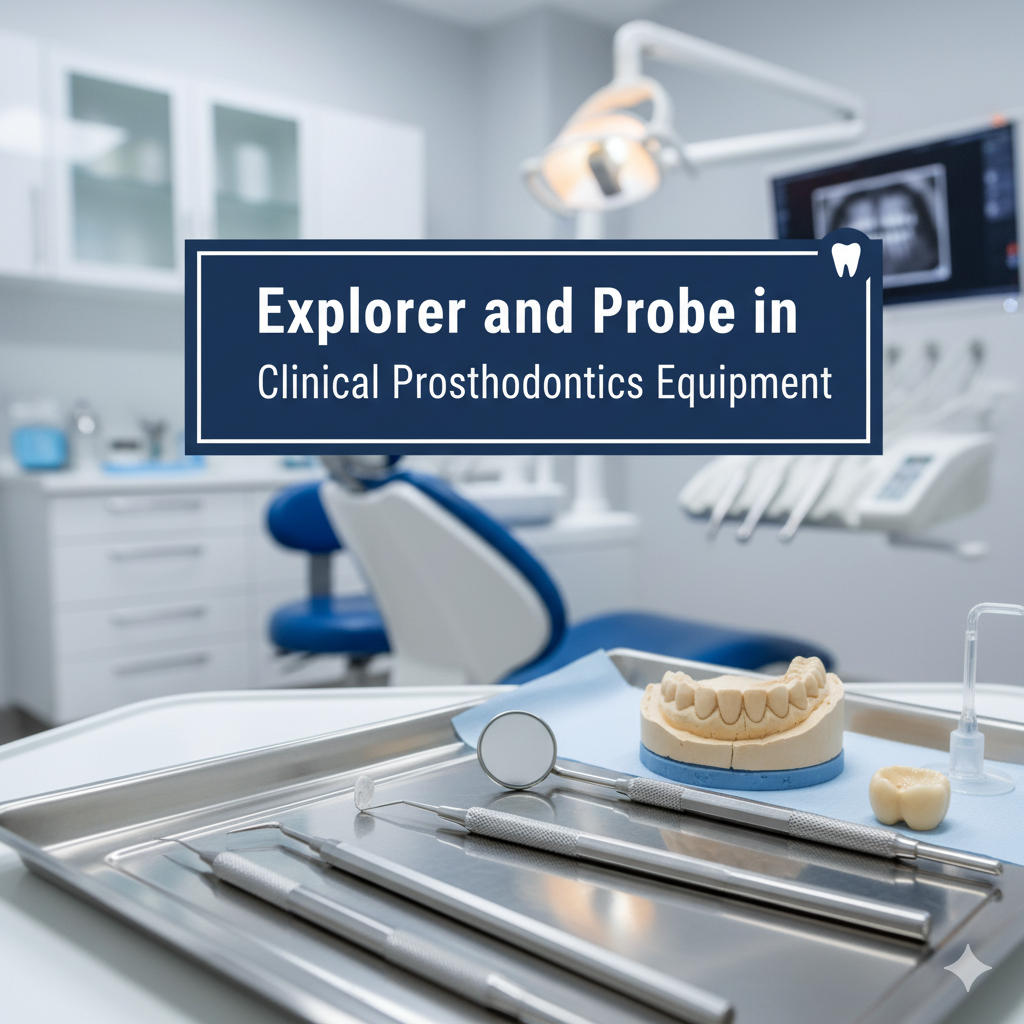
In the discipline of Clinical Prosthodontics, diagnostic accuracy determines the success of every treatment. Before a dentist can restore missing teeth or fabricate prosthetic appliances, a thorough examination must be carried out to understand the patient’s oral condition. Among the wide range of diagnostic tools used, the explorer and probe hold a significant position. These simple yet precise instruments allow dental professionals to evaluate both hard and soft tissues with exceptional sensitivity and accuracy. They are the first instruments a prosthodontist uses during examination and remain essential throughout diagnostic and maintenance phases.
🔹 Understanding Diagnostic Instruments in Prosthodontics
🔸 Importance of Diagnosis in Prosthodontic Practice
Diagnosis forms the foundation of every successful prosthodontic treatment plan. Whether fabricating crowns, bridges, or dentures, understanding the integrity of the remaining tooth structure and the health of the surrounding tissues is crucial. Diagnostic instruments provide tactile and visual information that imaging tools alone cannot offer. They allow the clinician to “feel” the surface of enamel, detect subgingival calculus, and measure periodontal health with millimeter precision.
🔸 Role of Explorer and Probe Among Diagnostic Tools
Among the many diagnostic tools, the explorer and periodontal probe are two of the most fundamental. While the explorer detects hard tissue changes like caries and defective margins, the probe measures soft tissue conditions, particularly periodontal pocket depth and gingival health. Together, they offer a complete diagnostic view that guides treatment planning in prosthodontics.
🔹 The Dental Explorer: Design, Structure, and Variations
🔸 Structural Components of the Dental Explorer
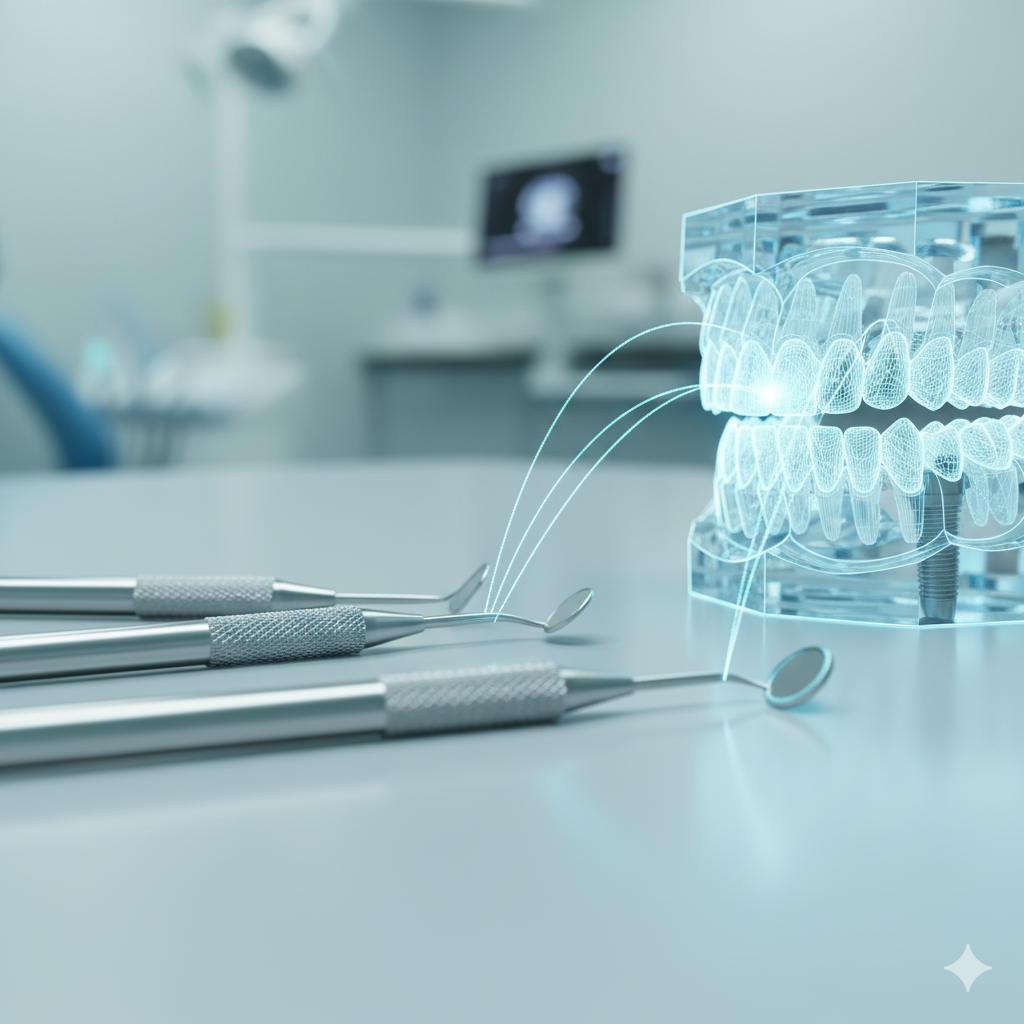
The dental explorer is a finely crafted instrument made of stainless steel. It consists of three main parts — the handle, shank, and working end.
- The handle provides grip and control, allowing the clinician to perform delicate tactile assessments.
- The shank connects the handle to the working end and may be straight or curved for accessibility.
- The working end is a fine, flexible, pointed tip designed to detect minute surface irregularities.
🔸 Common Types of Dental Explorers
Several types of explorers are available to suit specific diagnostic needs:
- Shepherd’s Hook Explorer (No. 23): Most commonly used to detect caries and examine restoration margins.
- Pigtail or Cowhorn Explorer: Used for detecting calculus deposits in interproximal areas.
- Orban Explorer: Features an angled shank, ideal for subgingival and interproximal exploration.
Each type of explorer allows the clinician to examine different regions of the oral cavity with precision and comfort.
🔹 Clinical Functions of the Dental Explorer
🔸 Detection of Caries and Surface Irregularities
The primary role of the dental explorer is to detect carious lesions and enamel defects. By gently gliding the sharp tip over tooth surfaces, the clinician can feel for soft, sticky, or rough areas that may indicate early decay. This tactile sensitivity is unmatched by visual inspection or radiographs.
🔸 Examination of Restorations and Prosthetic Margins
In prosthodontics, explorers help assess the margins of crowns, bridges, and fillings. They can detect overhanging edges, open margins, or gaps that could lead to plaque accumulation or secondary caries. Detecting such issues early helps ensure that prosthetic restorations fit precisely and last longer.
🔸 Assessment of Tooth Surface Texture
Before preparing a tooth for a crown or bridge, the explorer helps evaluate the hardness and texture of enamel and dentin. This ensures that the remaining tooth structure is sound enough to support the planned prosthesis.
🔹 The Periodontal Probe: Structure and Calibration
🔸 Design and Features of the Periodontal Probe
The periodontal probe is a thin, rod-like instrument with a blunt, calibrated tip marked in millimeters. The markings allow clinicians to measure the depth of the gingival sulcus or periodontal pockets. The probe’s tip is rounded to prevent tissue trauma, and its handle is ergonomically shaped for stability and comfort during use.
🔸 Common Types of Periodontal Probes
- Williams Probe: Marked at 1, 2, 3, 5, 7, 8, 9, and 10 mm; commonly used in clinical practice.
- UNC-15 Probe: Extends markings up to 15 mm for advanced periodontal evaluation.
- Michigan “O” Probe: Widely used for general assessments with clear millimeter markings.
Each type serves a specific clinical requirement depending on the case complexity and examination depth needed.
🔹 Clinical Functions of the Periodontal Probe
🔸 Measurement of Periodontal Pocket Depths
The main function of the periodontal probe is to measure the depth of the sulcus or periodontal pocket around each tooth. A healthy sulcus is usually 1–3 mm deep; deeper measurements indicate periodontal disease. In prosthodontics, this measurement helps determine whether the supporting tissues can sustain a fixed or removable prosthesis.
🔸 Evaluation of Gingival Health
The probe helps evaluate gingival inflammation, recession, and bleeding on probing, which are critical indicators of periodontal health. Understanding these factors ensures that prosthetic restorations do not compromise or overload the supporting tissues.
🔸 Post-Prosthetic Assessment
After prosthetic treatment, the probe is used to monitor periodontal response to the restorations. Regular probing helps detect early signs of inflammation or tissue changes that may affect the longevity of the prosthesis.
🔹 Combined Diagnostic Use of Explorer and Probe
🔸 Complementary Diagnostic Roles
While the explorer assesses hard tissues, the probe focuses on soft tissues. Used together, they provide a complete understanding of a patient’s oral condition. The explorer detects surface-level defects like caries and roughness, while the probe identifies deeper structural issues like attachment loss and bone resorption.
🔸 Importance in Prosthodontic Planning
In prosthodontics, combining both instruments during examination ensures that the dentist identifies every factor affecting prosthesis success — from carious lesions to tissue support. This integrated diagnostic approach minimizes treatment complications and improves restoration outcomes.
🔹 Maintenance and Sterilization of Explorers and Probes
🔸 Cleaning and Sterilization Protocols
Since explorers and probes come into direct contact with saliva and blood, strict sterilization is vital. After each use, they should be cleaned using an ultrasonic cleaner to remove debris, followed by autoclaving at 121°C for 15–20 minutes.
🔸 Instrument Care and Inspection
Before reuse, each instrument should be inspected for bent tips, dull edges, or faded calibration marks, as these can reduce diagnostic accuracy. Maintaining the sharpness of explorers and clarity of probe markings ensures long-term effectiveness and safety.
🔹 Importance of Explorer and Probe in Clinical Prosthodontics
🔸 Foundation of Accurate Diagnosis
Despite advancements in digital dentistry, manual diagnostic instruments like the explorer and probe remain the foundation of clinical diagnosis. Their tactile feedback allows dentists to detect conditions invisible to the eye or scanner.
🔸 Contribution to Successful Prosthodontic Outcomes
Every prosthodontic restoration depends on a stable and healthy oral foundation. Explorers and probes help ensure that both teeth and supporting tissues are properly evaluated before treatment. Their precise diagnostic input enhances the fit, function, and longevity of dental prostheses.
🔹 Conclusion
In summary, the explorer and probe are indispensable components of Clinical Prosthodontics Equipment, categorized under Diagnostic Instruments. The explorer helps identify caries, restoration defects, and enamel irregularities, while the periodontal probe measures soft tissue health and periodontal support. Together, they provide the diagnostic precision necessary for effective prosthodontic treatment planning. Even in the era of advanced imaging technologies, these instruments continue to define accuracy, reliability, and clinical excellence in dental diagnosis and care.