Prosthodontics

Digital vs Conventional Prosthodontic Workflows Equipment

In the field of prosthodontics, the approach to designing, fabricating, and delivering dental restorations has evolved dramatically. Traditional, manual techniques have long dominated dental labs and clinics, but the introduction of digital workflows and CAD/CAM technology has transformed the way dental professionals in Pakistan approach restorative dentistry. Understanding the differences between digital and conventional prosthodontic workflows and the equipment involved is crucial for dentists, technicians, and clinics striving for efficiency, accuracy, and patient satisfaction. At Biosurgico, Pakistan’s premier online marketplace for medical, dental, surgical, and non-surgical equipment, we provide high-quality tools, CAD/CAM systems, and conventional prosthodontic instruments to support every workflow. This article offers an in-depth comparison, highlighting the advantages, disadvantages, and practical considerations of each approach. Introduction to Prosthodontic Workflows Prosthodontic workflows involve the entire process of creating dental restorations such as crowns, bridges, dentures, and implant-supported prostheses. This includes impression taking, model fabrication, design, manufacturing, and finishing. Traditionally, dental technicians relied on manual methods using physical impressions, stone models, and hand instruments. Today, digital workflows allow for intraoral scanning, computer-aided design (CAD), and computer-aided manufacturing (CAM), offering speed, precision, and reproducibility. Understanding the difference between digital and conventional prosthodontic workflows helps dental labs and clinics in Pakistan optimize their investment in equipment, reduce errors, and improve patient care. Conventional Prosthodontic Workflows A. Overview Conventional workflows rely on physical impressions, gypsum models, wax-ups, and manual finishing techniques. Dental technicians manually fabricate restorations using hand tools, casting equipment, and polishing units. B. Key Equipment C. Advantages D. Disadvantages In Pakistan, conventional workflows remain popular in smaller clinics and laboratories where budget constraints or lack of access to advanced digital systems may limit technology adoption. Digital Prosthodontic Workflows (e.g., CAD/CAM) A. Overview Digital workflows leverage intraoral scanners, CAD software, and CAM milling machines or 3D printers to design and fabricate restorations. The process is largely virtual, reducing dependency on physical impressions and manual fabrication. B. Key Equipment C. Advantages D. Disadvantages In Pakistan, digital prosthodontic workflows are increasingly adopted in modern dental centers and high-end laboratories, especially in cities like Karachi, Lahore, and Islamabad, where patient demand for rapid and precise restorations is high. Key Differences Between Digital and Conventional Workflows Aspect Conventional Workflow Digital Workflow (CAD/CAM) Impression Method Physical silicone or alginate impressions Digital intraoral scanning Model Fabrication Gypsum/stone models Virtual models on CAD software Fabrication Process Manual shaping, waxing, casting, polishing Computer-aided milling or 3D printing Accuracy Moderate, operator-dependent High precision, consistent results Turnaround Time Slower Faster, efficient workflow Cost Lower initial investment High initial investment, lower long-term errors Training Basic technician skills Advanced training required for CAD/CAM Patient Comfort Discomfort from physical impressions Comfortable, minimally invasive digital impressions Hybrid Approach: Combining Digital and Conventional Workflows Many dental labs in Pakistan adopt a hybrid approach, leveraging both digital and conventional equipment. For example, a clinic may use CAD/CAM for design and milling but rely on manual finishing with dental lathes and polishing units for final aesthetic touches. This approach balances cost, efficiency, and precision, making it accessible for a broader range of dental practices in Pakistan. Choosing the Right Equipment for Your Lab A. Considerations for Pakistan B. Biosurgico’s Offering At Biosurgico, we provide a wide range of digital and conventional prosthodontic equipment, including: All products are sourced from reputable brands to ensure durability, accuracy, and performance for Pakistani dental labs and clinics. Maintenance Tips for Digital and Conventional Equipment Proper maintenance is essential in Pakistan’s environments, where dust and humidity can accelerate wear and tear on both digital and conventional equipment. Conclusion The choice between digital and conventional prosthodontic workflows depends on clinic size, budget, patient demand, and technician skill. Conventional methods remain reliable for small labs, while CAD/CAM systems offer speed, accuracy, and advanced design capabilities. Many modern laboratories adopt a hybrid approach to maximize efficiency and quality. At Biosurgico, Pakistan’s trusted marketplace for dental, surgical, medical, and non-surgical equipment, we provide all necessary tools for both workflows. Whether you need high-tech digital systems or traditional prosthodontic instruments, Biosurgico ensures quality, durability, and professional support for dental professionals across Pakistan. FAQs on Digital vs Conventional Prosthodontic Workflows Equipment 1. What is the main difference between digital and conventional workflows? Digital workflows use CAD/CAM systems and intraoral scanners, while conventional workflows rely on manual impressions, stone models, and hand tools. 2. Are digital workflows faster than conventional methods? Yes, digital workflows generally reduce fabrication time and improve reproducibility. 3. Can small labs in Pakistan afford digital prosthodontic equipment? Yes, hybrid approaches allow gradual adoption of CAD/CAM technology alongside conventional tools. 4. What maintenance is required for digital prosthodontic equipment? Regular software updates, scanner cleaning, calibration of milling units, and protection from dust and humidity are essential. 5. Where can I buy CAD/CAM and conventional dental lab equipment in Pakistan? Biosurgico provides certified digital and conventional prosthodontic tools for clinics and laboratories across Pakistan.

Digital vs Conventional Prosthodontic Workflows Equipment Read More »
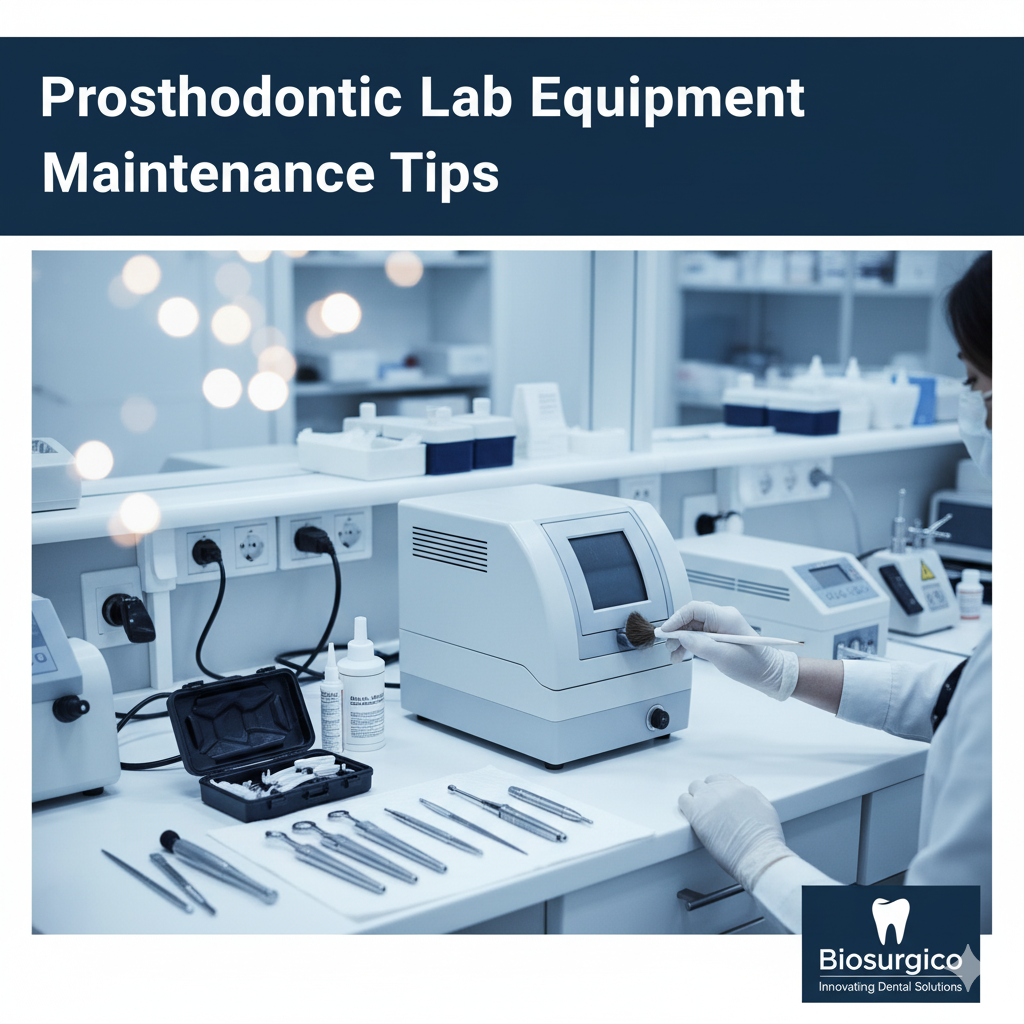
Prosthodontic Lab Equipment Maintenance Tips

Prosthodontic Lab Equipment Maintenance Tips | Biosurgico

In the evolving field of dentistry, prosthodontic laboratories play a crucial role in fabricating accurate and aesthetic dental restorations. From crowns and bridges to dentures and implant-supported structures, each product depends heavily on the quality and performance of laboratory equipment. In Pakistan, where dental technology is advancing rapidly, it has become essential for labs to adopt effective maintenance practices. This guide by Biosurgico, Pakistan’s trusted marketplace for medical, dental, surgical, and non-surgical equipment, provides complete prosthodontic lab equipment maintenance tips to help professionals improve efficiency, extend equipment lifespan, and ensure patient satisfaction. Understanding the Importance of Equipment Maintenance Regular maintenance of prosthodontic lab equipment is not just about cleaning or polishing — it’s about ensuring precision and reliability. Equipment like dental lathes, articulators, model trimmers, milling machines, and vacuum mixers work daily under heavy load. Without proper upkeep, they can quickly lose efficiency, accuracy, and sterility. In a professional dental setup, even the slightest error in calibration can lead to inaccurate prosthetics, patient discomfort, and wasted materials.For labs in Pakistan’s humid or dusty climates, maintenance becomes even more vital. Environmental conditions can accelerate corrosion, wear, and microbial growth. At Biosurgico, we emphasize preventive care and routine inspection to guarantee equipment reliability in all types of dental practices. Daily Cleaning and Disinfection Protocols A. Why Daily Cleaning is Essential Cleaning should be part of your daily workflow. Every prosthodontic lab tool that comes into contact with dental materials or patient impressions must be thoroughly disinfected. Cross-contamination not only risks patient health but can also affect restoration quality. B. Recommended Cleaning Steps By keeping a strict daily cleaning routine, dental professionals in Pakistan can maintain hygienic work environments and comply with healthcare standards. Scheduled Calibration and Performance Checks A. Maintaining Accuracy Calibration ensures every piece of equipment functions within its specified tolerance. Devices like casting machines, trimmers, and milling units must produce precise results. B. Frequency and Benefits Experts recommend calibrating every 3 to 6 months, depending on usage. In Pakistan, where voltage fluctuations are common, calibration should be more frequent. Regular checks prevent inaccuracies in prosthesis dimensions and avoid costly remakes. C. Partnering with Reliable Suppliers At Biosurgico, we offer genuine, high-quality calibration tools and accessories to keep your prosthodontic instruments functioning at their best. 4. Lubrication and Mechanical Care A. Protecting Moving Components Mechanical wear is one of the leading causes of premature equipment failure. Regular lubrication keeps joints, rotors, and bearings in smooth motion. B. Best Practices Use manufacturer-approved lubricants in recommended quantities. Over-lubrication can attract dust, while under-lubrication causes friction damage.Always wipe off excess lubricant and operate the machine briefly after applying to ensure even distribution. C. Support from Biosurgico Our marketplace provides original maintenance kits and oils designed for dental and prosthodontic machinery — ensuring long-term performance and reduced repair costs. Safe Storage and Climate Control A. Avoiding Environmental Damage Pakistan’s climate poses unique challenges. In humid regions like Karachi or coastal areas, corrosion and bacterial growth are major concerns. For such conditions: B. Organized Storage for Efficiency Arrange tools in labeled drawers or sterilized containers. Proper organization minimizes handling damage and speeds up workflow during lab operations. Regular Professional Servicing Even with consistent in-house maintenance, annual professional servicing is essential. Certified technicians can identify internal wear, replace aging parts, and recalibrate sensitive instruments.At Biosurgico, we connect clients with verified service providers and supply authentic spare parts for all types of dental and surgical equipment across Pakistan. This ensures your prosthodontic lab remains compliant with both local and international safety standards. Maintaining Detailed Service Logs A. Why Record Keeping Matters Maintaining detailed logs of equipment maintenance is a smart management strategy. Each entry — from cleaning dates to calibration results — helps track performance trends. B. Benefits For large labs, using digital record systems or maintenance tracking software can save time and prevent errors. Using Genuine and Certified Replacement Parts A. Avoid Counterfeit Components Using low-quality or counterfeit parts may appear cost-saving but can compromise performance and safety. Non-certified components can cause mechanical imbalance or inaccurate outcomes. B. Genuine Products from Biosurgico Biosurgico guarantees authentic, certified products directly from trusted manufacturers. Whether you need a new dental motor, milling bur, articulator part, or polishing wheel — our platform ensures reliability and quality that meet international dental standards. Staff Training and Safety Awareness A. Empowering Technicians Human error is a common cause of equipment damage. Training staff in correct handling, cleaning, and maintenance procedures is crucial.Conduct periodic training sessions to update your team on the latest hygiene practices, disinfection protocols, and operational guidelines. B. Training Resources Biosurgico provides comprehensive user manuals and technical guides with every equipment purchase, ensuring dental professionals in Pakistan have the right knowledge to use and maintain their tools effectively. Developing a Preventive Maintenance Routine Creating a preventive maintenance schedule ensures every piece of equipment receives timely attention. Combine daily cleaning, weekly inspection, monthly calibration, and annual servicing into a structured routine.Preventive care minimizes downtime, extends lifespan, and reduces the total cost of ownership for expensive prosthodontic equipment. This routine is especially beneficial for labs that operate continuously in busy cities like Lahore, Islamabad, and Karachi. Common Mistakes to Avoid in Equipment Maintenance By avoiding these errors, dental professionals can safeguard their investments and maintain clinical excellence. Conclusion Prosthodontic Lab Equipment Maintenance is the foundation of a successful dental practice. Clean, calibrated, and well-stored instruments ensure precision, hygiene, and efficiency in every restoration. At Biosurgico, we support dental professionals across Pakistan with premium prosthodontic tools, maintenance kits, and genuine spare parts. By implementing these maintenance tips and partnering with reliable suppliers, you can maximize productivity, minimize breakdowns, and maintain patient satisfaction at the highest level. Visit Biosurgico today to explore Pakistan’s most reliable range of medical, dental, surgical, and non-surgical equipment — where quality meets trust. FAQs (Prosthodontic Lab Equipment Maintenance Tips) 1. Why Prosthodontic Lab Equipment Maintenance Tips are important? Because consistent maintenance ensures accuracy, extends equipment life, and upholds hygiene in dental procedures. 2. How often should calibration be performed in

Prosthodontic Lab Equipment Maintenance Tips | Biosurgico Read More »

Prosthodontics Equipment & Supplies | Biosurgico

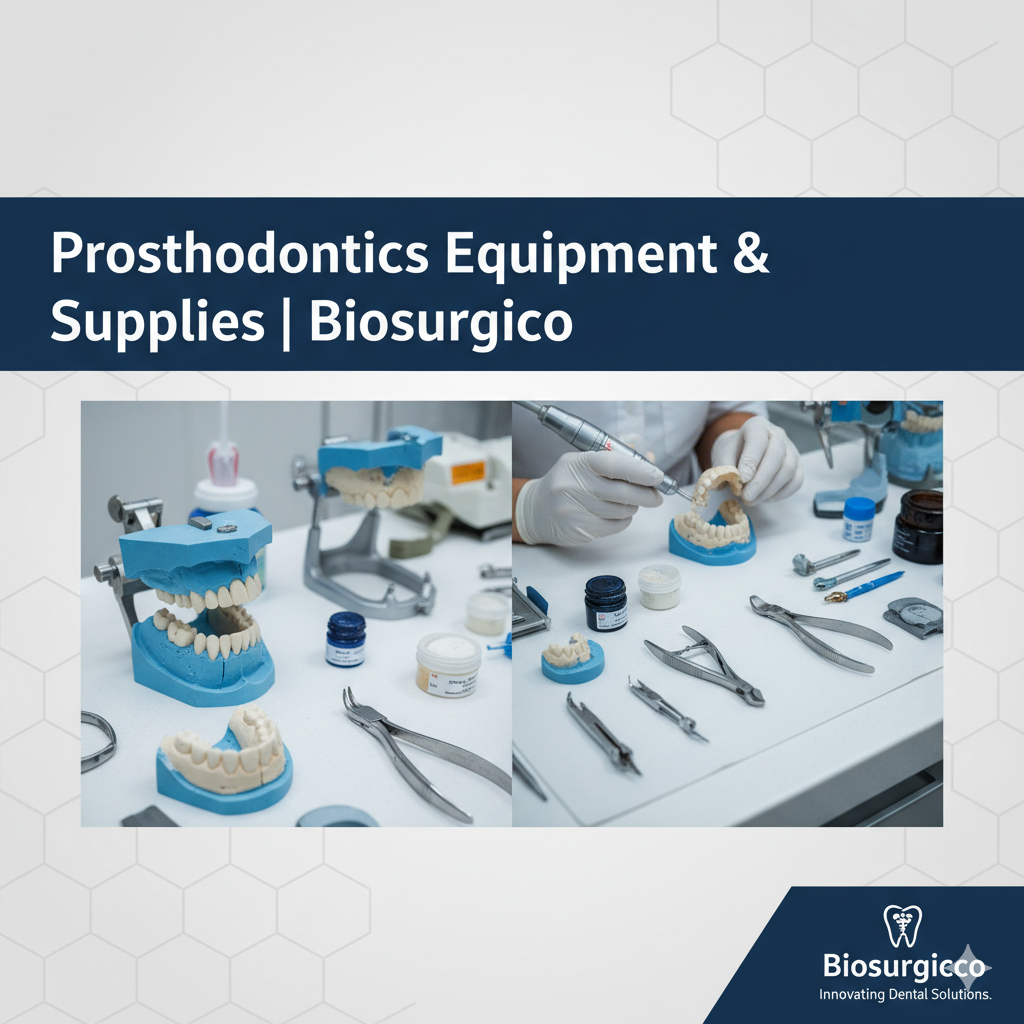
Prosthodontics Equipment & Supplies | Biosurgico

In the ever-evolving field of dentistry, prosthodontics stands as one of the most sophisticated and specialized branches—focused on the restoration and replacement of missing teeth and oral structures. From crowns and bridges to dentures and implants, prosthodontic treatment combines art, science, and precision. However, the true success of every prosthodontic procedure depends heavily on one factor—high-quality prosthodontic equipment and instruments. At Biosurgico, Pakistan’s trusted medical and dental equipment marketplace, we provide access to premium prosthodontic instruments, dental lab equipment, and prosthodontic supplies that help dental professionals deliver clinical excellence. We bring together verified suppliers, dental distributors, and manufacturers on one platform—making it easy for dental professionals across Pakistan to purchase reliable equipment with complete confidence. Whether you run a dental clinic, teaching institution, or prosthodontic laboratory, Biosurgico ensures you have access to everything you need—from basic diagnostic instruments to advanced prosthodontic lab systems—all in one place. Understanding Prosthodontics and Its Role in Modern Dentistry Prosthodontics is the specialized area of dentistry that focuses on designing, fabricating, and fitting artificial replacements for teeth and other parts of the mouth. The objective is not only aesthetic restoration but also the functional rehabilitation of the patient’s oral system. The discipline requires advanced skill, meticulous precision, and high-performance tools. Dental professionals depend on prosthodontic dental equipment that ensures accuracy, comfort, and long-term durability. In Pakistan, with the rising awareness of oral aesthetics and dental health, the demand for modern prosthodontic tools and equipment has significantly increased. Clinics, hospitals, and dental labs now seek world-class systems and instruments to provide their patients with international-standard treatment quality. Biosurgico serves this need by providing a centralized marketplace for premium dental and prosthodontic products. Types of Prosthodontics Equipment and Instruments Available at Biosurgico Prosthodontics covers multiple stages—from diagnosis to fabrication and final fitting. To meet these diverse requirements, Biosurgico offers a complete spectrum of prosthodontic equipment that serves both clinical and laboratory settings. 1. Diagnostic Prosthodontic Instruments Every successful dental restoration begins with accurate diagnosis and assessment. Diagnostic prosthodontic instruments help dentists examine oral conditions, measure dimensions, and determine the appropriate treatment plan. Common diagnostic instruments available at Biosurgico include: These instruments are made from high-quality surgical-grade stainless steel, offering excellent corrosion resistance, sharpness, and ergonomic handling—perfectly suited for the demanding work of Pakistani dental professionals. 2. Prosthodontic Lab Equipment In the dental laboratory, precision determines success. Prosthodontic lab equipment forms the backbone of prosthesis fabrication. At Biosurgico, we supply advanced, durable, and user-friendly dental lab systems designed for both small and large-scale labs. Essential prosthodontic lab equipment includes: At Biosurgico, all equipment is sourced from reliable local and international manufacturers, ensuring that Pakistani labs can perform complex restorations with global-level accuracy and durability. 3. Prosthodontic Dental Supplies Alongside equipment, dental prosthodontic supplies are essential for daily operations. These consumables determine the precision, strength, and longevity of restorations. Our range of prosthodontic supplies includes: These supplies are clinically tested, safe, and compatible with international prosthodontic techniques—giving Pakistani dentists access to materials trusted by professionals worldwide. (Institute of Digital Dentistry) 4. Clinical Prosthodontic Instruments Clinical prosthodontics demands instruments that ensure precision, control, and comfort. Biosurgico provides a wide selection of prosthodontic hand instruments that assist dentists in tooth preparation, denture fitting, and prosthetic adjustments. Some of our most popular clinical instruments include: Each tool is ergonomically designed for balance and control, ensuring efficient workflow and minimizing fatigue during long procedures. Prosthodontic Lab Technology: The Future of Dentistry in Pakistan Modern dental technology has revolutionized prosthodontics worldwide. Today’s labs increasingly rely on CAD/CAM systems, 3D printing, and digital impression scanners to achieve unmatched accuracy. At Biosurgico, we’re dedicated to keeping Pakistani dental professionals up to date with the latest innovations. Our marketplace features modern lab solutions including: By integrating digital prosthodontics into practice, clinics and labs can offer faster turnaround, better-fitting restorations, and improved patient satisfaction. Why Choose Biosurgico for Prosthodontic Equipment in Pakistan When it comes to medical and dental procurement, trust and authenticity are everything. Biosurgico has emerged as one of Pakistan’s most dependable marketplaces for healthcare professionals, offering a transparent, reliable, and convenient buying experience. Here’s why thousands of professionals trust Biosurgico: ✅ 1. Comprehensive Product Range From diagnostic instruments to digital prosthodontic lab systems, Biosurgico offers a vast catalog under one roof—saving you time and effort. ✅ 2. Verified Sellers & Distributors All sellers on Biosurgico undergo strict verification to ensure authenticity, certifications, and quality compliance. ✅ 3. Affordable & Transparent Pricing We maintain competitive pricing for all medical and dental categories, helping clinics and labs reduce operational costs without compromising quality. ✅ 4. Nationwide Availability Whether you’re based in Karachi, Lahore, Islamabad, Peshawar, or Quetta, Biosurgico ensures timely delivery anywhere in Pakistan. ✅ 5. Expert Customer Support Our dedicated dental equipment specialists are available to assist you in selecting the right products for your clinic or laboratory needs. How to Order Prosthodontic Equipment Online from Biosurgico Buying prosthodontic dental equipment in Pakistan has never been easier. Follow these simple steps: We offer secure payment methods, nationwide delivery, and after-sales support—ensuring a seamless shopping experience every time. Frequently Asked Questions (FAQs) Q1. What is the difference between prosthodontic instruments and equipment? Instruments are handheld tools used by dentists during procedures, while equipment refers to larger devices and machinery used in labs for fabrication and processing. Q2. Are Biosurgico’s prosthodontic products certified and approved for clinical use? Yes. All our prosthodontic instruments and supplies come from verified manufacturers and meet international dental standards. Q3. Does Biosurgico provide warranties on prosthodontic lab equipment? Absolutely. Most of our dental and lab equipment includes manufacturer warranties and technical support. Q4. Can small clinics in Pakistan order prosthodontic tools in small quantities? Yes. Biosurgico caters to both large institutions and small private clinics—offering flexible quantities and affordable pricing. Q5. Do you offer international brands? Yes, Biosurgico features both locally manufactured and imported prosthodontic brands, including top global suppliers in dental technology. Conclusion: Elevate Your Dental Practice with Biosurgico Prosthodontics is more than a dental specialty—it’s a blend of science, craftsmanship,

Prosthodontics Equipment & Supplies | Biosurgico Read More »

Shade Guide: Accurate Tooth Color Selection Tool

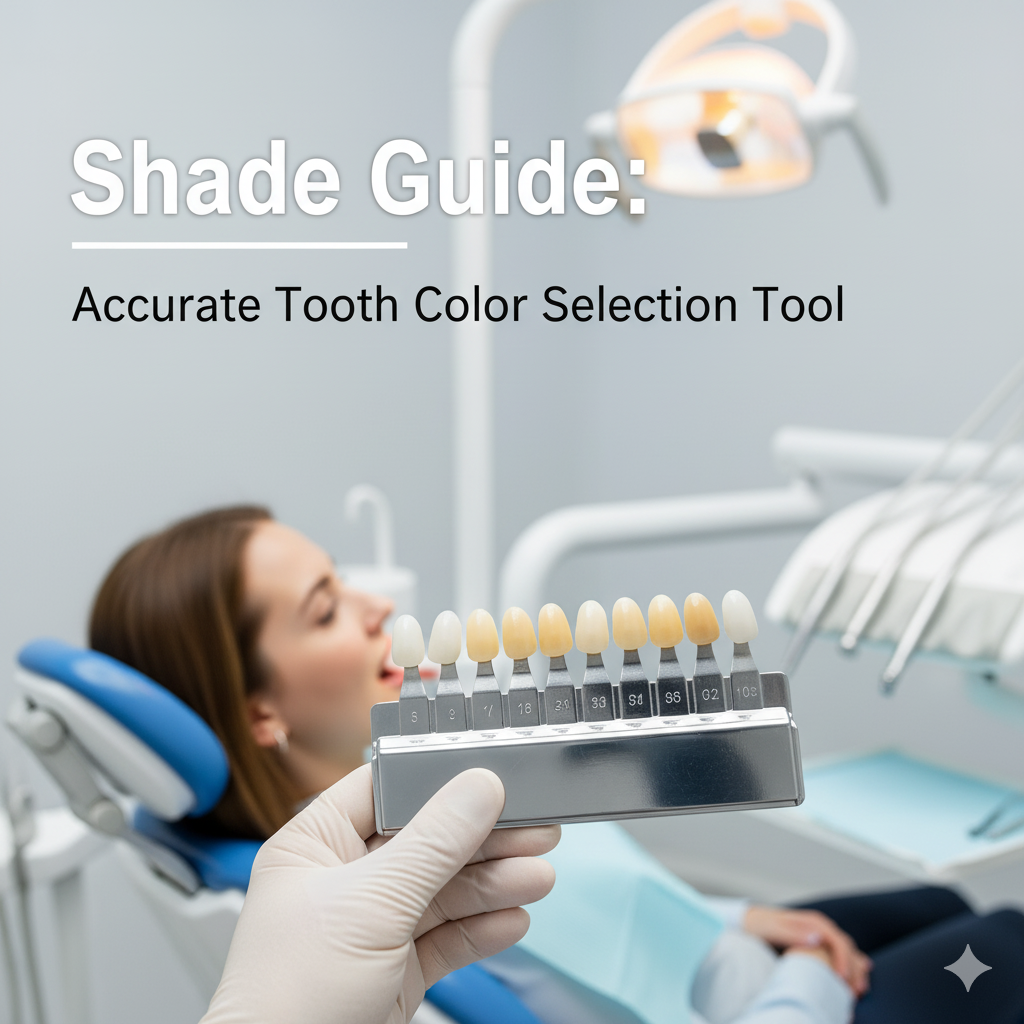
Shade Guide: Accurate Tooth Color Selection Tool

In the world of Clinical Prosthodontics, achieving an ideal tooth shade is as crucial as ensuring perfect fit and function. The shade guide plays a central role in this process. It is one of the most essential diagnostic instruments used by dentists and dental technicians to accurately determine the tooth color for crowns, bridges, veneers, and dentures. At Biosurgico Pakistan, we understand the importance of precision, aesthetics, and technology in modern dentistry. That’s why our range of shade guides helps dental professionals achieve natural, aesthetic, and consistent results — ensuring every smile designed in Pakistan looks both confident and lifelike. What Is a Shade Guide? A shade guide is a specialized dental instrument used to match and select the most appropriate tooth color for restorative and prosthetic treatments. It consists of a set of standardized tooth samples, each representing a particular shade, hue, and chroma level. These shade tabs are arranged in a logical sequence, allowing dentists to compare them directly with the patient’s natural teeth under proper lighting conditions. The selected shade is then communicated to the dental laboratory, ensuring that the final restoration matches the patient’s existing dentition. Importance of the Shade Guide in Clinical Prosthodontics In Clinical Prosthodontics, where aesthetics meet function, color matching is non-negotiable. Whether fabricating a dental crown, bridge, denture, or veneers, the restoration must seamlessly blend with the surrounding teeth. A shade guide enables: At Biosurgico, we supply high-precision shade guides in Pakistan that help prosthodontists and general dentists alike deliver optimal restorative outcomes. Types of Dental Shade Guides Different shade guides serve different purposes depending on the clinical case and the manufacturer. Below are the most common types used in Pakistan’s dental clinics and laboratories: 1. VITA Classical Shade Guide One of the most popular systems worldwide, the VITA Classical Shade Guide arranges shades into four groups (A, B, C, and D), based on color hue and chroma. 2. VITA 3D-Master Shade Guide This guide uses a scientifically structured approach, focusing on three parameters — lightness, chroma, and hue. It offers more precise shade differentiation, especially in advanced aesthetic dentistry. 3. Digital or Electronic Shade Guides Modern digital shade guides (like VITA Easyshade or ShadePilot) use spectrophotometric technology to measure color objectively. They eliminate subjective errors caused by lighting or human perception — a growing trend in Pakistan’s digital dentistry market. 4. Custom Shade Guides For specialized cases, such as cosmetic veneers or full-mouth rehabilitations, dentists may develop custom shade tabs using composite or ceramic materials to match local patient demographics and skin tones found across Pakistan. How to Use a Shade Guide Correctly Selecting the correct shade requires clinical skill and proper technique. Follow these professional steps for the most accurate results: At Biosurgico, our shade guides come with easy-to-read shade tabs, ergonomic handles, and sterilizable cases to ensure both precision and hygiene in every use. Clinical Applications of Shade Guides Shade guides are not limited to prosthodontic cases alone. They play a role across several dental disciplines in Pakistan: Factors Affecting Shade Selection Dentists in Pakistan must consider local environmental and biological factors that influence shade perception: Biosurgico shade guides are designed keeping these regional factors in mind — ensuring results that reflect Pakistan’s diverse patient demographics. Why Choose Biosurgico Shade Guides in Pakistan? As a trusted supplier of Clinical Prosthodontic Equipment and Diagnostic Instruments in Pakistan, Biosurgico ensures that every shade guide we offer meets international standards of accuracy, durability, and hygiene. ✅ Key Features of Biosurgico Shade Guides: Whether you run a dental clinic in Karachi, a prosthodontic lab in Lahore, or a teaching institute in Islamabad, Biosurgico provides reliable shade guides that help you deliver professional, aesthetic, and long-lasting results. (Wikipedia) Conclusion: The Foundation of Aesthetic Dentistry A shade guide is more than a color chart — it’s a diagnostic precision tool that bridges the gap between science and artistry in dentistry. By ensuring accurate tooth color selection, it lays the foundation for aesthetic success in every restorative or prosthodontic procedure. At Biosurgico Pakistan, we take pride in supplying high-quality shade guides and other Clinical Prosthodontic Diagnostic Instruments to empower dental professionals nationwide. For reliability, precision, and affordability — choose Biosurgico, Pakistan’s trusted dental equipment brand. FAQs: Shade Guide for Selecting Tooth Color 1. What is a dental shade guide? A dental shade guide is a tool used by dentists to determine the color of a patient’s teeth. It helps ensure that restorations, such as crowns, veneers, or fillings, match the natural tooth color for a seamless, aesthetic result. 2. How does a shade guide work? The guide consists of a series of standardized tooth-colored tabs. Each tab represents a different shade or tone. The dentist compares these tabs to the patient’s natural teeth under proper lighting to select the closest match. 3. Why is selecting the correct shade important? Matching the correct shade ensures that dental restorations look natural and blend seamlessly with surrounding teeth. Incorrect shade selection can result in restorations that appear artificial or noticeable. 4. Are there different types of shade guides? Yes, common types include: 5. Can lighting affect shade selection? Absolutely. Natural daylight or color-corrected dental lights are preferred. Fluorescent or overly warm lighting can distort color perception, leading to a mismatch.

Shade Guide: Accurate Tooth Color Selection Tool Read More »

Periodontal Probe | Diagnostic Dental Tool Pakistan

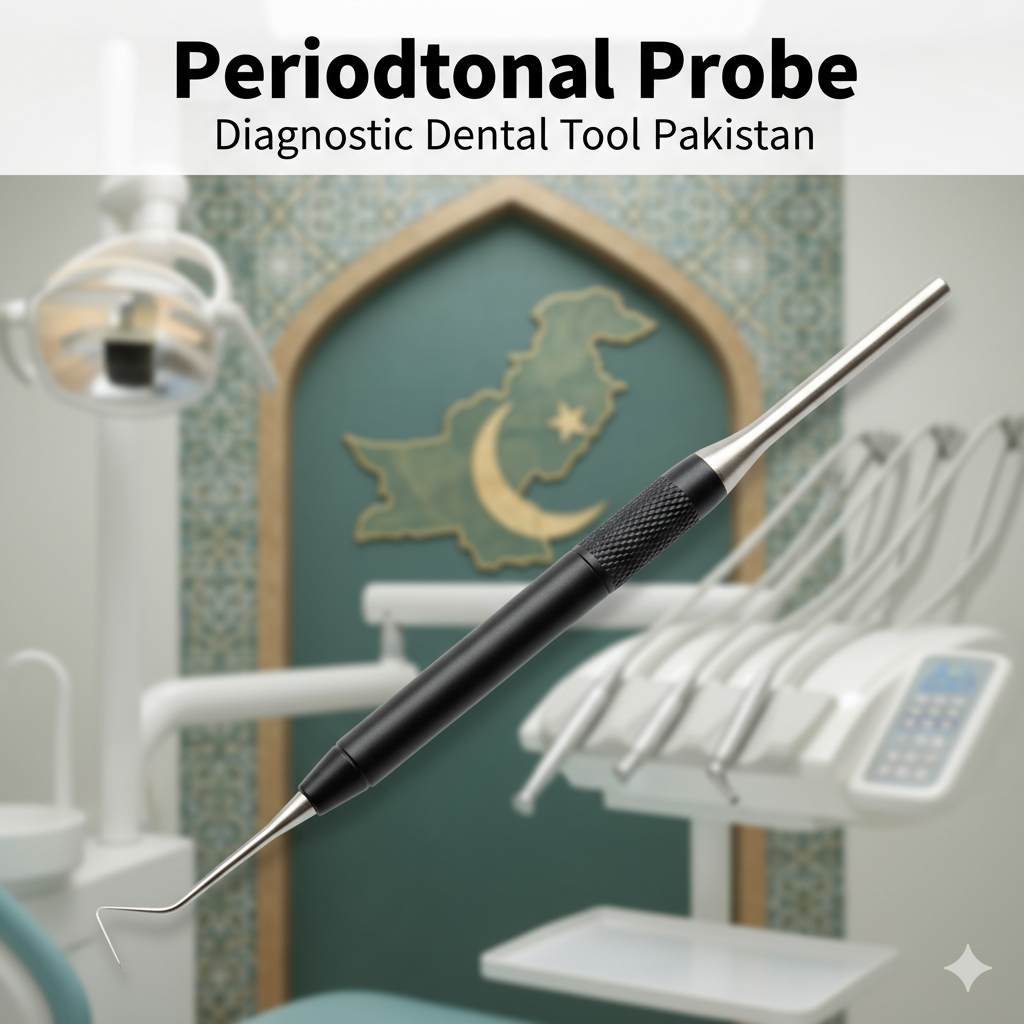
Periodontal Probe | Diagnostic Dental Tool Pakistan

In the realm of dental diagnostics and treatment planning, the periodontal probe plays a central and indispensable role. As part of the category “Clinical Prosthodontics Equipment → Diagnostic Instruments”, the periodontal probe serves as a precision tool that enables dentists to assess the health of the periodontium, measure pocket depths, and guide restorative and prosthodontic procedures. For dental practices across Pakistan — from Karachi to Lahore, Islamabad to Peshawar — awareness and mastery of the periodontal probe is key to delivering high-quality care and optimal outcomes. What is a Periodontal Probe? A periodontal probe is a slender, blunt-ended dental instrument marked in millimetres (or colour-bands) used to measure the depth of the gingival sulcus or periodontal pocket around a tooth. ScienceDirect+2Wikipedia+2 Typically made of stainless steel or other durable materials, the probe’s markings allow clinicians to quantify pocket depths, assess clinical attachment loss, measure gingival recession and other parameters. Colgate Professional+1 In lay terms: if you imagine the space between your gum and tooth, the periodontal probe is the “ruler” that helps the dentist determine if that space is healthy (typically ~1-3 mm) or has developed into a deeper pocket (≥4 mm) which may signal disease. My Costa Mesa Dentist+1 Why the Periodontal Probe Matters in Prosthodontics Diagnostic Foundation for Prosthodontic Planning In prosthodontics, especially when fabricating crowns, bridges, implants or full-mouth rehabilitations, understanding the condition of the periodontium is essential. If a tooth or its supporting bone is compromised by periodontal disease, prosthodontic outcomes may be jeopardised. The periodontal probe therefore serves as a diagnostic instrument that informs whether the periodontal tissues are adequate to support prosthetic work. Ensuring Long-Term Success of Dental Prostheses Poor periodontal support can lead to loosening of crowns, failure of implants, bone loss and other complications. By using the probe to measure periodontal pocket depths, attachment levels and gingival health, the prosthodontist can design treatments that factor in these parameters — ensuring that the prosthetic work is placed in a healthy and stable foundation. Integrating with Periodontal Therapy In many cases, prior to prosthodontic rehabilitation, periodontal treatment (for example scaling, root-planning, regenerative therapy) may be required. The probe helps to monitor the effect of such therapy by recording baseline measurements and follow-ups, so that when prosthetic work begins, the tissues are stable. As noted in literature, the probe continues to be “an important diagnostic instrument by the dental profession.” Key Features & Specifications of a Good Periodontal Probe For a dental practice in Pakistan investing in clinical prosthodontics equipment, here are the features you should look for when sourcing a quality periodontal probe: In the context of Pakistan, where clinics span from high-end urban dental centres to rural outreach programmes, selecting a probe that is both cost-effective and meets sterilisation/cleaning requirements is critical. Technique: How to Use a Periodontal Probe Reliably Accurate measurements with the periodontal probe depend less on the instrument alone and more on the technique. Key steps include: For dental practices in Pakistan, training staff and maintaining consistent probing technique is essential — this ensures accurate diagnosis and better prosthodontic outcomes. Clinical Parameters Measured by the Periodontal Probe The periodontal probe is used not only for pocket depth but multiple relevant parameters: These measurements are critical in treatment planning — including whether prosthodontic work can proceed immediately, or whether periodontal therapy must precede it. Buying & Maintaining Periodontal Probes: Pakistan Market Considerations What to Look For When Sourcing For dental clinics in Pakistan (Karachi, Lahore, Islamabad, etc.), here are practical considerations: Maintenance & Hygiene Advantages of Using the Right Periodontal Probe in Prosthodontics Challenges & Best Practices in the Pakistani Context Challenges Best Practices Summary & Conclusion For dental clinics across Pakistan looking to excel in the field of prosthodontics, integrating the periodontal probe as a routine diagnostic instrument is essential. At Biosurgico, we emphasise the importance of selecting a high-quality probe, standardising technique, and using the measurements obtained to guide prosthodontic planning and execution. When periodontal health is assessed reliably, prosthetic work becomes more predictable, durable and successful. The periodontal probe is not just a small instrument – it is the gateway to understanding the foundation upon which crowns, bridges, implants and full-mouth rehabilitations rest. If you are sourcing clinical prosthodontics equipment (diagnostic instruments) for your practice in Pakistan, give the periodontal probe the attention it deserves — from purchase, training, technique to monitoring. With that, you’ll raise the standard of care, enhance patient outcomes, and bolster your clinic’s reputation in a competitive market. 🦷 Frequently Asked Questions (FAQs) About the Periodontal Probe 1. What is a periodontal probe used for? A periodontal probe is a diagnostic dental instrument used to measure the depth of the space (pocket) between the tooth and surrounding gum tissue. It helps dentists identify gum disease, monitor periodontal health, and plan prosthodontic treatments such as crowns, bridges, and implants. 2. How many millimetres is normal for a periodontal pocket? A healthy gingival sulcus typically measures 1–3 mm. A measurement of 4 mm or more may indicate the presence of periodontal disease, requiring professional cleaning or treatment before prosthodontic procedures begin. 3. What are the types of periodontal probes? There are several types, including: 4. How should a periodontal probe be used correctly? Insert the probe gently alongside the tooth, keeping it parallel to the tooth’s long axis. Apply light pressure (10–20 g) and “walk” the probe around the tooth in small steps to record six readings per tooth (three on the facial side and three on the lingual side). Consistency is key for accurate diagnosis. 5. Why is the periodontal probe important in prosthodontics? Before creating any prosthesis, the dentist must assess the gum and bone support. Using a periodontal probe ensures that crowns, bridges, and implants are placed only on teeth and tissues that can support them, leading to long-term success of dental restorations.

Periodontal Probe | Diagnostic Dental Tool Pakistan Read More »

Tweezers / Cotton Pliers – Clinical Prosthodontics Instruments | Biosurgico Pakistan

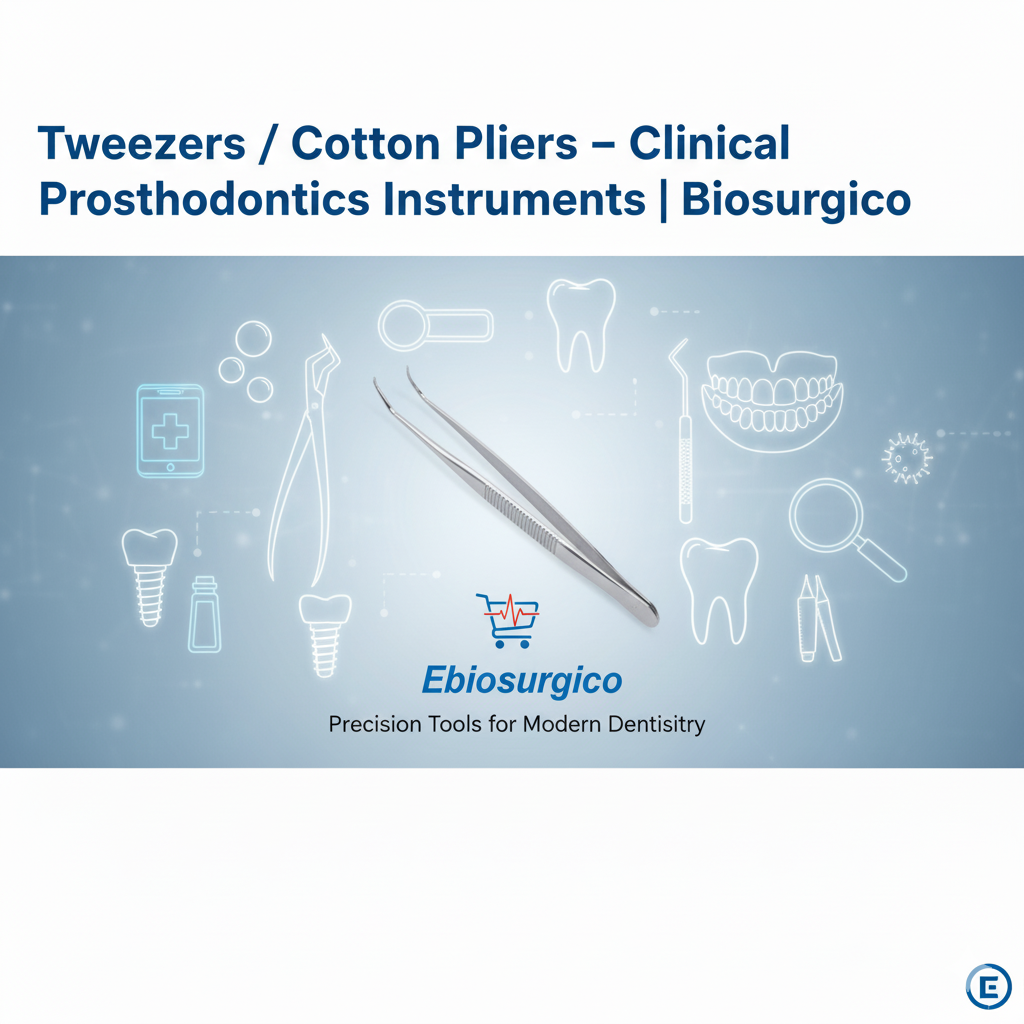
Tweezers / Cotton Pliers – Clinical Prosthodontics Instruments | Biosurgico

In the field of clinical prosthodontics, precision and hygiene are non-negotiable. One of the most commonly used diagnostic instruments is the tweezer or cotton plier — a small yet indispensable tool that plays a vital role in every dental setup. At Biosurgico, we provide high-quality tweezers and cotton pliers in Pakistan, designed to meet international dental standards while remaining affordable for clinics, dental schools, and hospitals nationwide. Whether you’re a practicing dentist in Karachi, Lahore, or Islamabad, or a dental student looking for reliable instruments, our Biosurgico tweezers and cotton pliers ensure precision handling, comfort, and durability in every procedure. What Are Tweezers / Cotton Pliers in Prosthodontics? Tweezers, also known as cotton pliers, are handheld dental instruments used to grasp, hold, transfer, and place small items such as cotton pellets, wedges, matrix bands, or other materials into and out of the oral cavity. In prosthodontics, they play an important role in maintaining a sterile field and preventing contamination during diagnostic and restorative procedures. At Biosurgico Pakistan, our dental tweezers are made from premium stainless steel, ensuring resistance to corrosion and long-term performance — key factors for Pakistan’s humid climate and frequent sterilization cycles. Types of Tweezers / Cotton Pliers Available in Pakistan Locking Cotton Pliers Locking tweezers are equipped with a locking mechanism that secures the grip, allowing the dentist to hold materials firmly without continuous pressure. These are ideal for prosthodontic and endodontic procedures, where precision placement of materials is essential. Non-Locking Tweezers Non-locking models offer more flexibility and control, making them suitable for diagnostic and examination purposes. They are commonly used in dental colleges and teaching hospitals across Pakistan due to their simplicity and affordability. Curved and Straight Designs Depending on the procedure, dentists may prefer curved or straight tweezers. Biosurgico’s range includes both variants, enabling easier access to posterior areas and better handling in limited spaces — an important factor in prosthodontic diagnostics. Clinical Applications in Prosthodontics In clinical prosthodontics, tweezers / cotton pliers are used for: These applications highlight the importance of tweezers not only as diagnostic instruments but also as support tools in prosthodontic laboratory and chairside work. Why Choose Biosurgico Tweezers / Cotton Pliers in Pakistan? 🔹 Premium-Grade Stainless Steel Manufactured using German stainless steel, our tweezers guarantee corrosion resistance, autoclavable safety, and longevity, ideal for the Pakistani dental environment. 🔹 Ergonomic Design Biosurgico cotton pliers are designed for maximum comfort, reducing hand fatigue during prolonged procedures. 🔹 Local Availability & After-Sales Support Being a Pakistan-based supplier, Biosurgico ensures quick delivery, competitive pricing, and reliable after-sales service to dentists and distributors across Karachi, Lahore, Islamabad, Multan, Peshawar, and Faisalabad. 🔹 CE and ISO Certified Instruments Every Biosurgico product, including our tweezers and cotton pliers, complies with international dental instrument standards (CE & ISO certifications), ensuring both safety and precision. Maintenance and Sterilization Tips for Pakistani Dental Clinics Proper maintenance extends the life of your dental instruments. Here are a few care tips for tweezers and cotton pliers: By following these steps, dental professionals can ensure longer instrument life and maintain infection control standards in compliance with Pakistan Medical & Dental Council (PMDC) guidelines. Biosurgico – Your Trusted Supplier of Dental Instruments in Pakistan At Biosurgico, we take pride in being a leading manufacturer and supplier of dental and surgical instruments in Pakistan, specializing in Clinical Prosthodontics Equipment. Our mission is to equip dentists with high-quality diagnostic instruments that improve precision, patient comfort, and procedural safety. We offer bulk supplies for: Where to Buy Tweezers / Cotton Pliers in Pakistan? You can easily buy dental tweezers and cotton pliers in Pakistan directly from Biosurgico’s official website or through our authorized distributors. We deliver to all major cities, with nationwide shipping options and customized instrument sets for prosthodontics, endodontics, and orthodontics. Conclusion Tweezers / Cotton Pliers are small yet crucial diagnostic instruments in clinical prosthodontics, enabling precision, hygiene, and control during dental procedures. Choosing Biosurgico Pakistan ensures access to durable, ergonomic, and certified dental instruments trusted by professionals nationwide. Upgrade your dental toolkit today with Biosurgico tweezers and cotton pliers — engineered for precision, designed for comfort, and built for Pakistan’s dental professionals. 🦷 Frequently Asked Questions (FAQs) About Tweezers / Cotton Pliers – Biosurgico Pakistan What are Tweezers / Cotton Pliers used for in dentistry? Tweezers, also known as cotton pliers, are diagnostic dental instruments used to hold, grasp, and transfer small items such as cotton pellets, wedges, and restorative materials during dental procedures. In clinical prosthodontics, they help maintain asepsis and precision by allowing dentists to handle materials without direct hand contact. What materials are Biosurgico Tweezers / Cotton Pliers made from? At Biosurgico, our tweezers and cotton pliers are made from high-grade German stainless steel, ensuring corrosion resistance, long-lasting sharpness, and easy sterilization. These materials are ideal for Pakistan’s humid climate and regular autoclave use in dental clinics. What types of Tweezers / Cotton Pliers are available in Pakistan? Biosurgico offers a wide range of dental tweezers and cotton pliers in Pakistan, including: How should I sterilize my dental tweezers and cotton pliers? Always clean the instruments immediately after use, rinse under running water, and ultrasonically clean if available. Dry completely before autoclaving to prevent rust. Avoid using harsh chemicals that may damage the steel finish — especially important in Pakistani dental environments with high humidity. Can I buy Tweezers / Cotton Pliers online in Pakistan? Yes! You can buy dental tweezers and cotton pliers online in Pakistan directly from Biosurgico’s official website. We offer nationwide delivery to Karachi, Lahore, Islamabad, Multan, Peshawar, Faisalabad, and other cities — with fast shipping and wholesale pricing options for dental clinics and colleges.

Tweezers / Cotton Pliers – Clinical Prosthodontics Instruments | Biosurgico Read More »

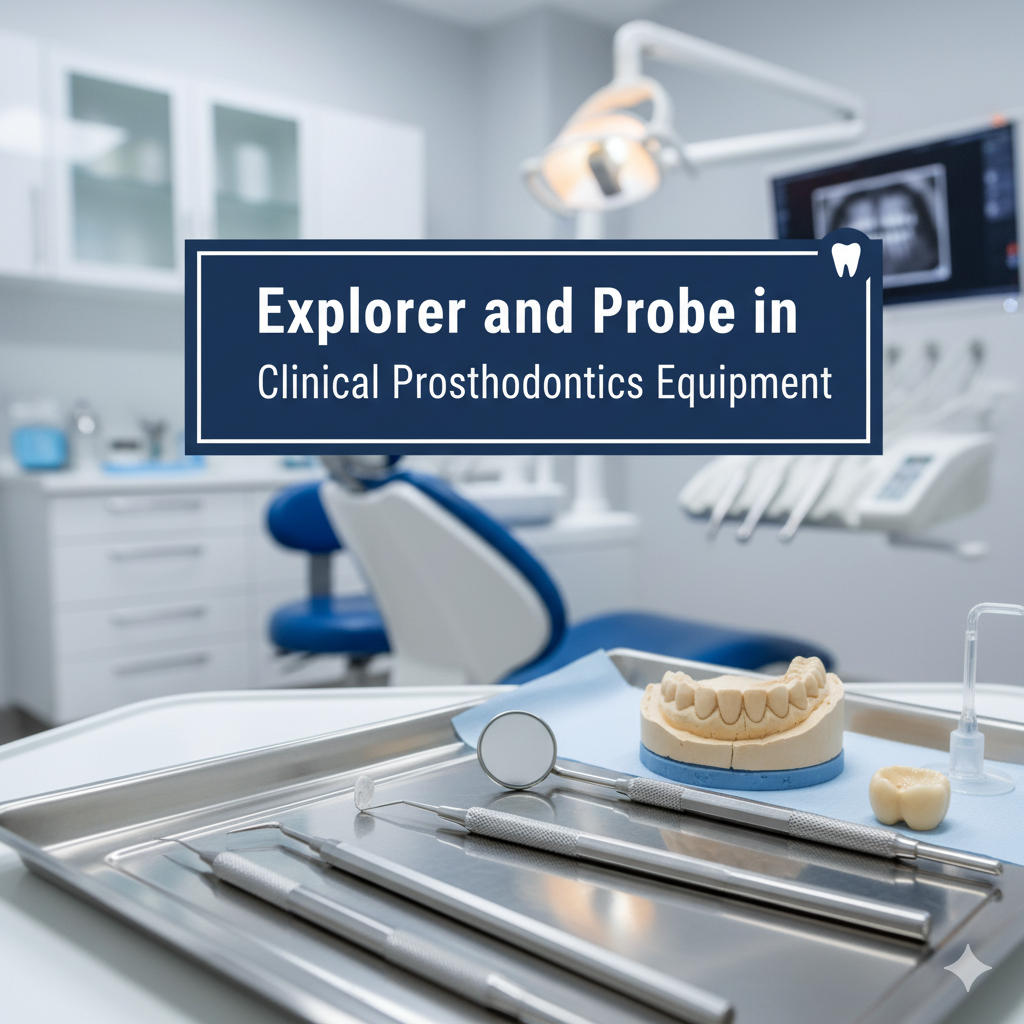
Explorer and Probe in Clinical Prosthodontics

Explorer and Probe in Clinical Prosthodontics Equipment

In the discipline of Clinical Prosthodontics, diagnostic accuracy determines the success of every treatment. Before a dentist can restore missing teeth or fabricate prosthetic appliances, a thorough examination must be carried out to understand the patient’s oral condition. Among the wide range of diagnostic tools used, the explorer and probe hold a significant position. These simple yet precise instruments allow dental professionals to evaluate both hard and soft tissues with exceptional sensitivity and accuracy. They are the first instruments a prosthodontist uses during examination and remain essential throughout diagnostic and maintenance phases. 🔹 Understanding Diagnostic Instruments in Prosthodontics 🔸 Importance of Diagnosis in Prosthodontic Practice Diagnosis forms the foundation of every successful prosthodontic treatment plan. Whether fabricating crowns, bridges, or dentures, understanding the integrity of the remaining tooth structure and the health of the surrounding tissues is crucial. Diagnostic instruments provide tactile and visual information that imaging tools alone cannot offer. They allow the clinician to “feel” the surface of enamel, detect subgingival calculus, and measure periodontal health with millimeter precision. 🔸 Role of Explorer and Probe Among Diagnostic Tools Among the many diagnostic tools, the explorer and periodontal probe are two of the most fundamental. While the explorer detects hard tissue changes like caries and defective margins, the probe measures soft tissue conditions, particularly periodontal pocket depth and gingival health. Together, they offer a complete diagnostic view that guides treatment planning in prosthodontics. 🔹 The Dental Explorer: Design, Structure, and Variations 🔸 Structural Components of the Dental Explorer The dental explorer is a finely crafted instrument made of stainless steel. It consists of three main parts — the handle, shank, and working end. 🔸 Common Types of Dental Explorers Several types of explorers are available to suit specific diagnostic needs: Each type of explorer allows the clinician to examine different regions of the oral cavity with precision and comfort. 🔹 Clinical Functions of the Dental Explorer 🔸 Detection of Caries and Surface Irregularities The primary role of the dental explorer is to detect carious lesions and enamel defects. By gently gliding the sharp tip over tooth surfaces, the clinician can feel for soft, sticky, or rough areas that may indicate early decay. This tactile sensitivity is unmatched by visual inspection or radiographs. 🔸 Examination of Restorations and Prosthetic Margins In prosthodontics, explorers help assess the margins of crowns, bridges, and fillings. They can detect overhanging edges, open margins, or gaps that could lead to plaque accumulation or secondary caries. Detecting such issues early helps ensure that prosthetic restorations fit precisely and last longer. 🔸 Assessment of Tooth Surface Texture Before preparing a tooth for a crown or bridge, the explorer helps evaluate the hardness and texture of enamel and dentin. This ensures that the remaining tooth structure is sound enough to support the planned prosthesis. 🔹 The Periodontal Probe: Structure and Calibration 🔸 Design and Features of the Periodontal Probe The periodontal probe is a thin, rod-like instrument with a blunt, calibrated tip marked in millimeters. The markings allow clinicians to measure the depth of the gingival sulcus or periodontal pockets. The probe’s tip is rounded to prevent tissue trauma, and its handle is ergonomically shaped for stability and comfort during use. 🔸 Common Types of Periodontal Probes Each type serves a specific clinical requirement depending on the case complexity and examination depth needed. 🔹 Clinical Functions of the Periodontal Probe 🔸 Measurement of Periodontal Pocket Depths The main function of the periodontal probe is to measure the depth of the sulcus or periodontal pocket around each tooth. A healthy sulcus is usually 1–3 mm deep; deeper measurements indicate periodontal disease. In prosthodontics, this measurement helps determine whether the supporting tissues can sustain a fixed or removable prosthesis. 🔸 Evaluation of Gingival Health The probe helps evaluate gingival inflammation, recession, and bleeding on probing, which are critical indicators of periodontal health. Understanding these factors ensures that prosthetic restorations do not compromise or overload the supporting tissues. 🔸 Post-Prosthetic Assessment After prosthetic treatment, the probe is used to monitor periodontal response to the restorations. Regular probing helps detect early signs of inflammation or tissue changes that may affect the longevity of the prosthesis. 🔹 Combined Diagnostic Use of Explorer and Probe 🔸 Complementary Diagnostic Roles While the explorer assesses hard tissues, the probe focuses on soft tissues. Used together, they provide a complete understanding of a patient’s oral condition. The explorer detects surface-level defects like caries and roughness, while the probe identifies deeper structural issues like attachment loss and bone resorption. 🔸 Importance in Prosthodontic Planning In prosthodontics, combining both instruments during examination ensures that the dentist identifies every factor affecting prosthesis success — from carious lesions to tissue support. This integrated diagnostic approach minimizes treatment complications and improves restoration outcomes. 🔹 Maintenance and Sterilization of Explorers and Probes 🔸 Cleaning and Sterilization Protocols Since explorers and probes come into direct contact with saliva and blood, strict sterilization is vital. After each use, they should be cleaned using an ultrasonic cleaner to remove debris, followed by autoclaving at 121°C for 15–20 minutes. 🔸 Instrument Care and Inspection Before reuse, each instrument should be inspected for bent tips, dull edges, or faded calibration marks, as these can reduce diagnostic accuracy. Maintaining the sharpness of explorers and clarity of probe markings ensures long-term effectiveness and safety. 🔹 Importance of Explorer and Probe in Clinical Prosthodontics 🔸 Foundation of Accurate Diagnosis Despite advancements in digital dentistry, manual diagnostic instruments like the explorer and probe remain the foundation of clinical diagnosis. Their tactile feedback allows dentists to detect conditions invisible to the eye or scanner. 🔸 Contribution to Successful Prosthodontic Outcomes Every prosthodontic restoration depends on a stable and healthy oral foundation. Explorers and probes help ensure that both teeth and supporting tissues are properly evaluated before treatment. Their precise diagnostic input enhances the fit, function, and longevity of dental prostheses. 🔹 Conclusion In summary, the explorer and probe are indispensable components of Clinical Prosthodontics Equipment, categorized under Diagnostic Instruments. The explorer helps

Explorer and Probe in Clinical Prosthodontics Equipment Read More »

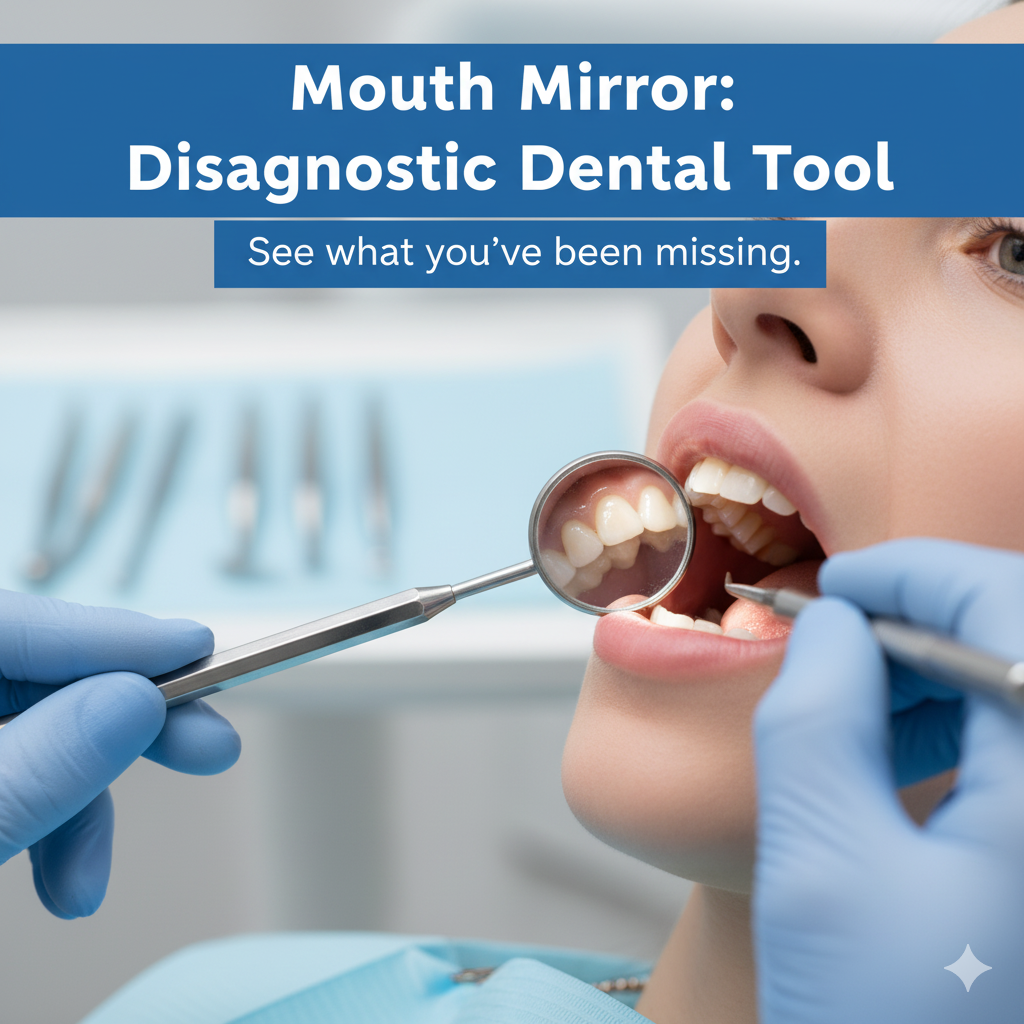
Mouth Mirror: Essential Diagnostic Dental Tool

Mouth Mirror: Essential Diagnostic Dental Tool

In the field of clinical prosthodontics, precision, visibility, and accuracy are the foundations of successful dental treatment. Among the numerous instruments used by dental professionals, the mouth mirror holds a place of great importance. Despite its simple design, this diagnostic tool plays a vital role in facilitating examination, diagnosis, and treatment planning. This is a small, round, concave or flat mirror attached to a slender metal handle, specifically designed to assist dentists in visualizing areas of the mouth that are otherwise difficult to see directly. The mouth mirror not only enhances visibility inside the oral cavity but also aids in illumination, retraction, and indirect vision, making it one of the most indispensable instruments in a prosthodontic setup. What Is a Mouth Mirror? This is a diagnostic dental instrument that consists of two main components — a mirror head and a handle. The mirror head is usually circular and available in various diameters (commonly 18–24 mm), while the handle provides a firm and ergonomic grip for the clinician. The mirror surface may be plane (flat) or concave, depending on the level of magnification required. In prosthodontics, the mouth mirror is essential for assessing the oral cavity before, during, and after dental procedures such as crown preparation, denture fabrication, or implant placement. It allows the dentist to observe hidden surfaces of teeth, evaluate soft tissues, and assess occlusion and alignment, all of which are critical in prosthodontic diagnosis and treatment planning. Types of Mouth Mirrors It comes in several variations based on its reflecting surface and construction. Understanding these types helps clinicians choose the right tool for specific procedures. 1. Plane (Flat) Mouth Mirror A plane mouth mirror has a flat reflective surface that provides a true image without magnification. Although it may cause slight double images when used indirectly, it is ideal for general examination and simple diagnostic tasks. 2. Concave Mouth Mirror The concave mirror produces a magnified image of the examined area, which enhances visibility of small structures, fine details, and surface irregularities. This type is particularly useful in prosthodontics for detecting marginal discrepancies in crowns, bridges, or dentures. 3. Front Surface Mirror A front surface mouth mirror eliminates ghost images by placing the reflective coating on the outer surface of the glass. This ensures a sharp, clear, and distortion-free reflection. It is widely used in modern prosthodontic clinics for precision-based diagnostic work. Functions and Uses of a Mouth Mirror in Prosthodontics It serves multiple functions that make it indispensable in diagnostic and operative dentistry. Its primary uses include: 1. Indirect Vision One of the most important uses of the mouth mirror is providing indirect vision for areas that are not directly visible, such as the posterior surfaces of teeth or the lingual surfaces of mandibular molars. This is essential during prosthodontic impressions, crown fittings, and occlusal evaluations. 2. Illumination By reflecting light onto dark or shadowed areas of the mouth, the mouth mirror enhances illumination. This improves visualization of fine details, enabling the clinician to make more accurate diagnoses. 3. Retraction of Soft Tissues It helps retract the tongue, lips, and cheeks, providing better access to the working area without causing patient discomfort. This is especially important during impression-taking, tooth preparation, and fitting prostheses. 4. Transillumination When light is reflected through anterior teeth using the mirror, it helps reveal caries, cracks, or structural defects — an essential step in comprehensive diagnostic procedures. (Wikipedia) Importance of Mouth Mirror in Clinical Prosthodontics In clinical prosthodontics, the mouth mirror is more than a visual aid — it is a diagnostic necessity. Accurate examination of oral structures determines the success of prosthetic rehabilitation. The instrument allows the prosthodontist to: Without the clarity and accessibility provided by the mouth mirror, diagnosing complex cases or evaluating prosthodontic outcomes would be nearly impossible. Components and Design of a Mouth Mirror A standard mouth mirror consists of: Modern mouth mirrors may also feature anti-fog coatings, fiber-optic illumination, or disposable mirror heads, enhancing efficiency and infection control. Maintenance and Sterilization Since the mouth mirror comes into direct contact with the patient’s oral cavity, proper cleaning and sterilization are critical. After each use, the mirror should be: Neglecting these steps can lead to cross-contamination, compromising patient safety and clinical hygiene. Conclusion It may appear to be a simple tool, but its importance in clinical prosthodontics cannot be overstated. As one of the most vital diagnostic instruments, it allows dentists to examine, diagnose, and treat with precision. From providing indirect vision and illumination to retracting soft tissues, It supports nearly every aspect of dental examination and prosthodontic procedures. Maintaining high-quality mouth mirrors, ensuring proper sterilization, and choosing the right type for specific procedures are essential practices for every dental professional committed to excellence in patient care.

Mouth Mirror: Essential Diagnostic Dental Tool Read More »

Area of Services

Pharmaceuticals

Surgical & Non-Surgical Materials and Equipments

Dental - Instruments and Materials

Hospital and Clinics - Tools and Materials

Contact

Office 402, 4th Floor, Serwer Plaza, Main Boulevard Sabzazar, Block G Sabzazar Housing Scheme Phase 1 & 2 Lahore, Punjab 54500

© 2025 BioSurgico All Rights Reserved – Powered by Digital Era Solution