

A dental surveyor is a specialized tool used in dentistry to analyze and measure the features of a patient’s teeth and gums. It is an essential piece of equipment in dental laboratories and prosthetics practices, providing accurate data for the construction of dental prosthetics such as dentures, crowns, bridges, and implants. The dental surveyor allows professionals to accurately evaluate the surface features of the dental arch, ensuring that prosthetics are made to fit the patient’s mouth precisely.
At Biosurgico, we offer high-quality dental surveyors designed for dental labs and prosthetic applications in Pakistan. This tool is indispensable for dentists, orthodontists, and dental technicians to ensure the proper alignment and fitting of dental restorations. In this article, we will dive deeper into the features, applications, and benefits of using a dental surveyor in your practice.
The Importance of a Dental Surveyor in Dental Practices
A dental surveyor is crucial for precise measurements and alignment in the preparation and fitting of dental prosthetics. The tool serves multiple functions, all of which are aimed at ensuring accurate, comfortable, and functional dental restorations for patients. Here’s why a dental surveyor is indispensable in your dental practice:
- Precise Measurements: The dental surveyor provides precise measurements of the contours and features of the dental arches, which is essential when fabricating dental prosthetics. This precision ensures that the prosthetics will fit comfortably in the patient’s mouth and function as intended.
- Undercut Detection: One of the most important functions of the dental surveyor is detecting undercuts in the dental arch. These undercuts must be carefully addressed when designing and fitting dentures and other dental appliances. The surveyor provides clear readings of these features, guiding the technician in adjusting the prosthetics to avoid issues with retention and fit.
- Guiding Prosthetic Fabrication: The dental surveyor helps dental professionals design dentures, crowns, bridges, and partials by providing critical data on the angulations and height of the teeth. This information is vital for accurate restoration and proper alignment.
- Improving Patient Comfort and Functionality: By ensuring accurate measurements and alignment, the dental surveyor helps create dentures and prosthetics that not only fit better but also function more effectively. Properly aligned restorations improve comfort, speech, and chewing efficiency for the patient.
Key Features of a High-Quality Dental Surveyor
When choosing a dental surveyor for your practice or laboratory, it’s important to consider certain features that ensure accuracy, durability, and ease of use. Here are the key features to look for:
- Adjustable Arm and Tilt: A high-quality dental surveyor will have an adjustable arm that allows for tilting and rotating the instrument to take measurements from various angles. This flexibility ensures that the surveyor can be used on a wide range of dental models and patient arch configurations.
- Clear, Accurate Markings: The dental surveyor should provide clear and accurate markings or indicators for undercuts, angles, and heights. This precision is critical for designing well-fitting and functional dental prosthetics.
- Precision Locking Mechanism: A precision locking mechanism ensures that the adjustments made to the arm or attachments stay in place, reducing the risk of errors during measurements. This is especially important when working with multiple dental models and during the fabrication process.
- Durable Construction: A dental surveyor should be made from high-quality materials, such as stainless steel or aluminum, to ensure long-term durability and resistance to wear and tear. A durable construction will ensure that the instrument lasts for years in a busy dental practice or laboratory.
- Versatile Attachments: Many dental surveyors come with various attachments, such as analyzing rods and height gauges, which help provide comprehensive measurements for different types of prosthetics. Versatile attachments improve the surveyor’s utility and make it suitable for a wider range of dental applications.
- Easy Calibration: The dental surveyor should be easy to calibrate to ensure that the measurements are accurate each time it is used. Calibration should be straightforward, allowing dental technicians to maintain precise readings with minimal effort.
Applications of a Dental Surveyor in Prosthetic and Restorative Dentistry
A dental surveyor has several important applications in prosthetic and restorative dentistry:
- Denture Fabrication: The dental surveyor plays a vital role in the fabrication of dentures. By accurately measuring the angles and contours of the edentulous (toothless) arch, it helps technicians create dentures that fit comfortably and securely in the patient’s mouth.
- Crown and Bridge Work: In crown and bridge work, the dental surveyor is used to measure and adjust the tooth’s contours and alignment. The device ensures that the crowns or bridges fit precisely over the prepared tooth or abutment, improving the function and longevity of the restoration.
- Implant Prosthetics: For implant-supported prosthetics, the dental surveyor is used to ensure that the prosthetic is aligned with the underlying implant structure. This alignment ensures that the implant and prosthetic work together seamlessly to provide maximum function.
- Partial Dentures: Dental surveyors are used to evaluate the dental arch for the placement of partial dentures. The surveyor helps determine the exact positioning and angles of the clasps and rests to ensure the proper fit and retention of the partial denture.
- Orthodontics: The dental surveyor is also used in orthodontic work, where precise measurements of the bite and tooth positioning are essential. The instrument aids in creating accurate models for braces and other orthodontic appliances.
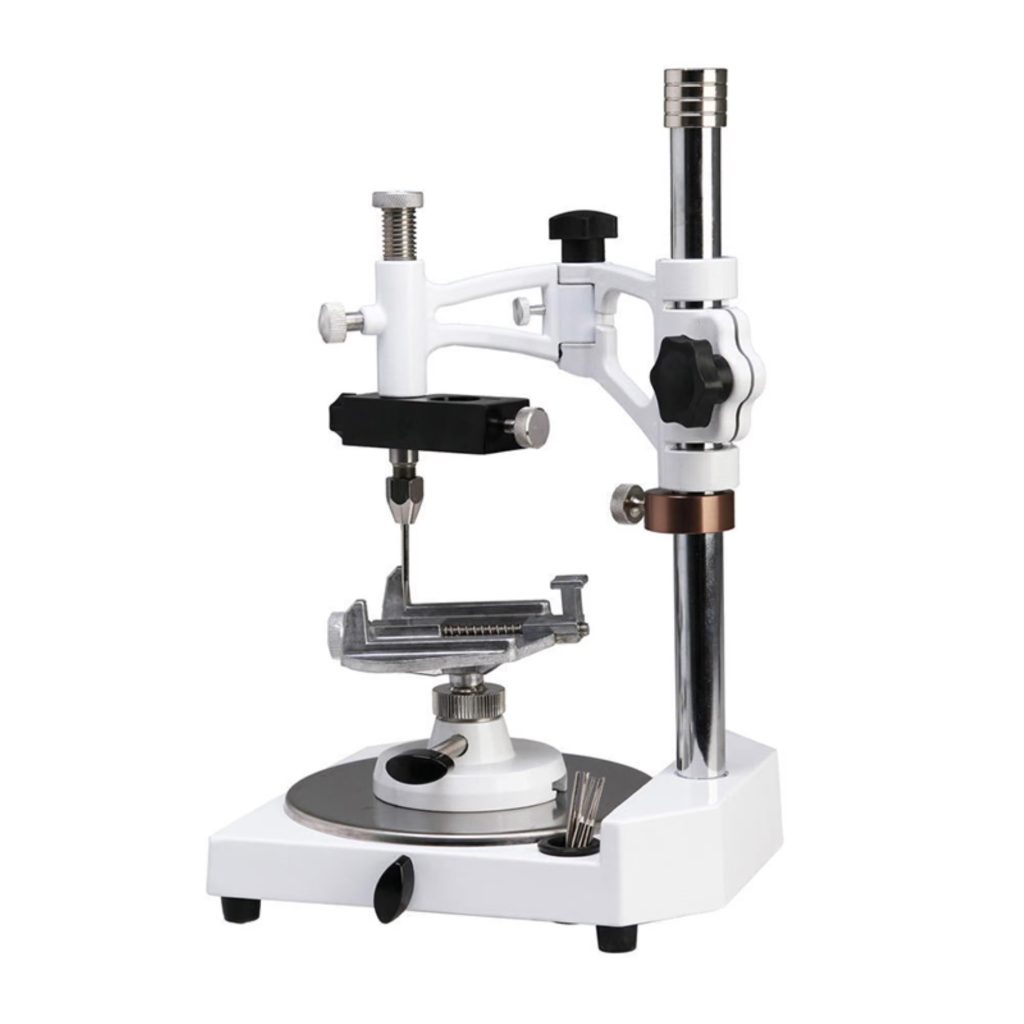
How to Choose the Right Dental Surveyors for Your Practice
When selecting a dental surveyors for your practice or laboratory, there are several factors to consider:
- Type of Dental Work: Consider the type of prosthetic work you typically do. If you specialize in dentures, choose a dental surveyor that is specifically designed for this purpose. If your focus is on crowns and bridges, ensure that the surveyor is equipped with the necessary tools to measure and align these restorations.
- Precision Needs: Look for a dental surveyor with fine-tuned adjustments and clear indicators to ensure that you get the most accurate measurements. Precision is key to creating comfortable and functional dental restorations.
- Ease of Use and Adjustability: Ensure that the dental surveyor is easy to use, with adjustable arms and a user-friendly design. Ergonomic features that reduce strain and improve efficiency are especially important in a busy dental lab.
- Budget: Dental surveyors come in a wide range of prices, from basic models to high-end versions with advanced features. Consider your practice’s budget while choosing the right model, but remember that investing in a quality surveyor will improve the accuracy and overall quality of your dental work.
FAQs About Dental Surveyors
Q1: What is a dental surveyor used for?
A1: A dental surveyor is used to measure and analyze the contours, angles, and features of the dental arch. It helps in the fabrication of dentures, crowns, bridges, and prosthetics to ensure a precise fit and function.
Q2: Can a dental surveyor be used for implants?
A2: Yes, a dental surveyor can be used to ensure accurate alignment when designing implant-supported prosthetics. It helps evaluate the proper positioning of the implant and restoration.
Q3: How do I calibrate a dental surveyor?
A3: Calibration of a dental surveyor typically involves adjusting the height and angle settings to match the reference points on the model. Follow the manufacturer’s instructions for calibration to ensure accurate measurements.
Q4: Is a dental surveyor necessary for every dental practice?
A4: While a dental surveyor is essential for labs and practices focused on prosthetics and restorative dentistry, its necessity depends on the type of dental work being performed. For practices focused on routine checkups and hygiene, it may not be required.
Q5: How often should a dental surveyor be cleaned?
A5: Dental surveyors should be cleaned regularly to ensure that all components remain in good working condition. Clean the device after every use to maintain hygiene and accuracy in measurements.
Conclusion
It is crucial tool for creating accurate, high-quality dental prosthetics and restorations. Whether you’re working with dentures, crowns, or implants, the precision provided by a dental surveyor ensures that your restorations fit perfectly, providing patients with improved comfort and functionality. At Biosurgico, we offer high-quality dental surveyors designed for dental labs in Pakistan. Browse our selection today to find the perfect surveyor for your practice and take your dental work to the next level.