
When medical professionals handle chest trauma or spontaneous pneumothorax, they must act quickly and efficiently to prevent complications and restore lung function. These conditions, if left untreated, can lead to severe respiratory distress and even life-threatening emergencies. To manage such cases, clinicians often rely on a simple yet powerful device known as the flutter valve chest tube.
This one-way valve system effectively removes trapped air from the pleural space, allowing the collapsed lung to re-expand without the risk of air flowing back in. Unlike traditional water-seal systems, the flutter valve offers greater mobility, quicker setup, and ease of use—making it an excellent choice in both emergency and outpatient settings.
In the sections that follow, you’ll learn what a flutter valve chest tube is, how it functions, the unique advantages it offers. And the clinical scenarios where it provides the most value. Whether you’re a healthcare professional, student, or someone looking to understand this critical medical tool, this guide will walk you through all the essentials.
What is a Flutter Valve Chest Tube?
A flutter valve chest tube, also known as a Heimlich valve, serves as a crucial component in chest drainage systems. Medical professionals use this one-way valve to manage conditions such as pneumothorax (collapsed lung) and pleural effusion, where air or fluid accumulates in the pleural space and compromises normal breathing.
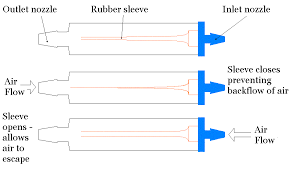
The valve connects directly to the end of a chest tube, forming a closed system that actively supports lung re-expansion. As the patient exhales or pressure builds up inside the chest cavity, the valve opens automatically to allow trapped air or fluid to escape. Once the pressure equalizes or airflow ceases, the valve closes immediately, preventing outside air from re-entering the pleural space.
As a result, the flutter valve promotes stable intrathoracic pressure and supports natural lung expansion—without requiring a traditional water-seal system. Furthermore, because of its compact design and ease of use, clinicians often choose it in emergency settings, during patient transport, or in outpatient care, where mobility and simplicity are crucial.
How Does a Flutter Valve Chest Tube Work?
To understand how it functions, it’s important to consider the mechanism behind it. The valve typically consists of a flexible rubber tube that collapses to close and opens when air or fluid pressure pushes through it.
Here’s how it works:
- Insertion: A chest tube is inserted into the pleural space.
- Connection: The flutter valve is connected to the chest tube.
- Function: As air escapes from the chest cavity, the valve opens.
- Seal: Once pressure equalizes or air flow ceases, the valve shuts, preventing backflow.
Moreover, this design allows patients more mobility, making it especially useful in emergency transport or outpatient care.
When is a Flutter Valve Chest Tube Used?
The flutter valve chest tube is widely used in both emergency and non-emergency medical settings. Common indications include:
- Spontaneous Pneumothorax
Often seen in tall, thin individuals or patients with underlying lung disease. - Traumatic Pneumothorax
Caused by blunt or penetrating chest trauma, such as rib fractures or stab wounds. - Iatrogenic Pneumothorax
Occurs due to medical procedures like central line insertion or lung biopsy. - Postoperative Care
Used after certain surgeries to ensure any residual air or fluid is drained properly.
Emergency medical providers often choose flutter valves in pre-hospital care settings because they offer portability and ease of use.
Advantages of Using a Flutter Valve Chest Tube
There are several reasons why medical professionals opt for flutter valve chest tubes over traditional water-seal systems:
- Portability: Lightweight and compact—ideal for ambulatory patients.
- No Water Seal Required: Eliminates the need for water chambers and reduces spillage risk.
- Patient Mobility: Patients can walk or move around more freely.
- Ease of Use: Simple design allows for rapid deployment in emergencies.
- Cost-Effective: Reduces hospital stay and equipment costs in some cases.
Considerations and Limitations
While flutter valve chest tubes offer many advantages, there are also important considerations:
- Doctors may prefer a traditional water-seal system for large pneumothoraces or significant fluid drainage.
- Let me know if you’d like more rephrased examples!
- Proper Positioning: Incorrect placement can lead to valve malfunction or re-entry of air.
- Monitoring: Regular assessment is still necessary to ensure proper functioning.
Clinicians should guide the use of flutter valve chest tubes based on clinical evaluation and the specific needs of each patient.
Final Thoughts
In conclusion, the flutter valve chest tube plays a critical role in the active management of thoracic emergencies. Especially in cases of pneumothorax and chest trauma. This compact yet powerful device empowers healthcare professionals to quickly relieve intrathoracic pressure. Allowing the affected lung to re-expand and restore proper respiratory function.
Furthermore, the flutter valve’s design eliminates the need for bulky water-seal systems. Which makes it especially valuable in pre-hospital settings, emergency transport, and outpatient care. Medical teams can respond swiftly and efficiently without compromising the patient’s mobility or comfort.
Additionally, the ease of use and portability of the flutter valve chest tube make it a preferred choice not only in hospitals. But also in remote or resource-limited environments where rapid intervention can mean the difference between life and death.
However, it’s important for healthcare providers to maintain a clear understanding of proper insertion techniques, valve function, and patient monitoring protocols. By staying well-trained and observant, medical teams can ensure optimal outcomes and reduce the risk of complications.
Ultimately, when used correctly, the flutter valve chest tube enables clinicians to act decisively, save lives, and improve recovery times in critical care situations. Its simplicity doesn’t compromise its impact—it strengthens it.