
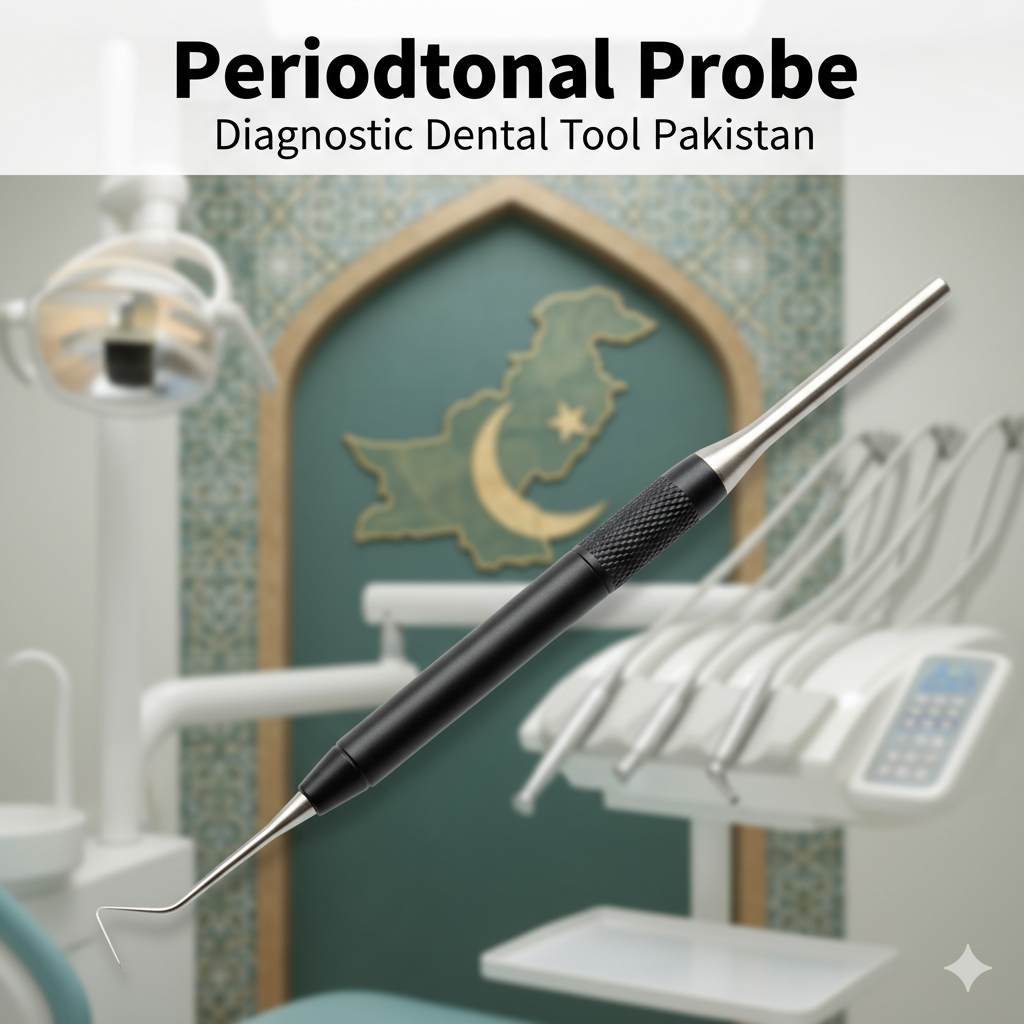
In the realm of dental diagnostics and treatment planning, the periodontal probe plays a central and indispensable role. As part of the category “Clinical Prosthodontics Equipment → Diagnostic Instruments”, the periodontal probe serves as a precision tool that enables dentists to assess the health of the periodontium, measure pocket depths, and guide restorative and prosthodontic procedures. For dental practices across Pakistan — from Karachi to Lahore, Islamabad to Peshawar — awareness and mastery of the periodontal probe is key to delivering high-quality care and optimal outcomes.
What is a Periodontal Probe?
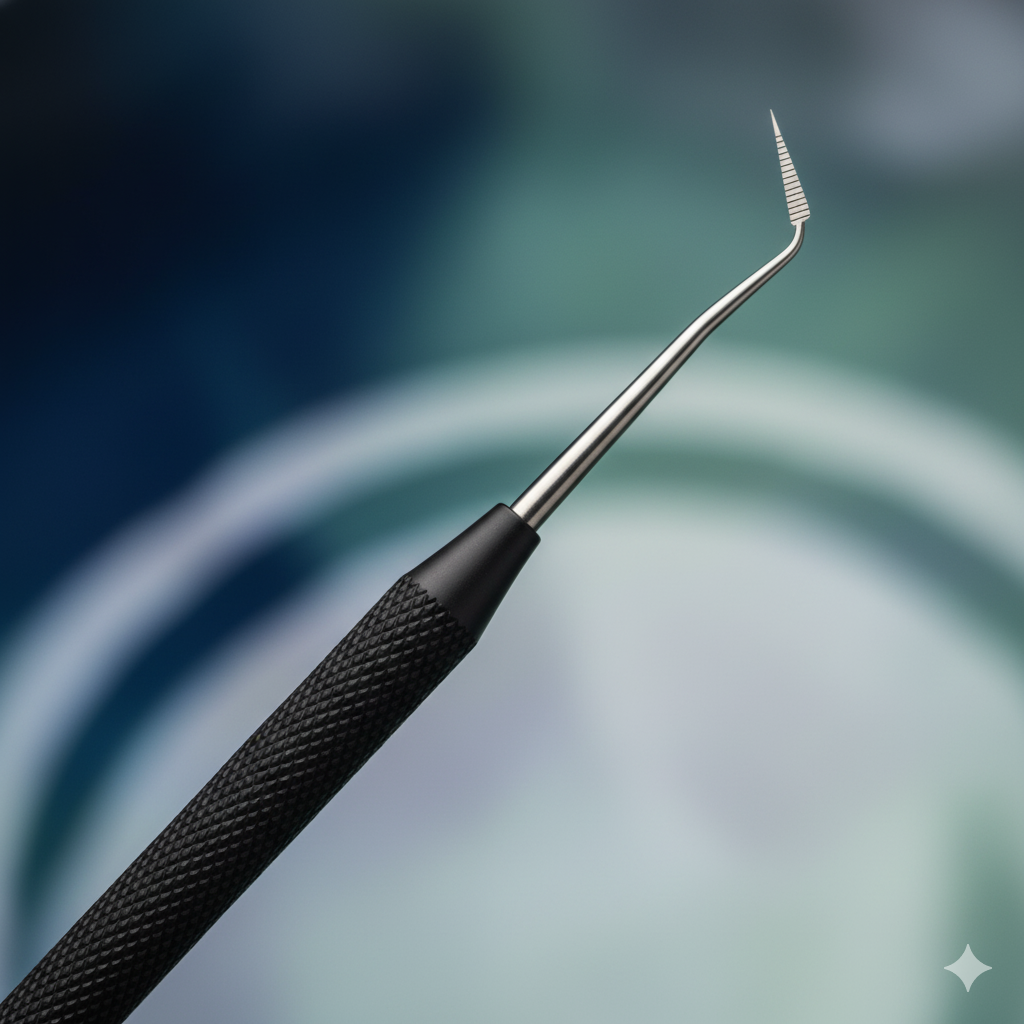
A periodontal probe is a slender, blunt-ended dental instrument marked in millimetres (or colour-bands) used to measure the depth of the gingival sulcus or periodontal pocket around a tooth. ScienceDirect+2Wikipedia+2
Typically made of stainless steel or other durable materials, the probe’s markings allow clinicians to quantify pocket depths, assess clinical attachment loss, measure gingival recession and other parameters. Colgate Professional+1
In lay terms: if you imagine the space between your gum and tooth, the periodontal probe is the “ruler” that helps the dentist determine if that space is healthy (typically ~1-3 mm) or has developed into a deeper pocket (≥4 mm) which may signal disease. My Costa Mesa Dentist+1
Why the Periodontal Probe Matters in Prosthodontics
Diagnostic Foundation for Prosthodontic Planning
In prosthodontics, especially when fabricating crowns, bridges, implants or full-mouth rehabilitations, understanding the condition of the periodontium is essential. If a tooth or its supporting bone is compromised by periodontal disease, prosthodontic outcomes may be jeopardised. The periodontal probe therefore serves as a diagnostic instrument that informs whether the periodontal tissues are adequate to support prosthetic work.
Ensuring Long-Term Success of Dental Prostheses
Poor periodontal support can lead to loosening of crowns, failure of implants, bone loss and other complications. By using the probe to measure periodontal pocket depths, attachment levels and gingival health, the prosthodontist can design treatments that factor in these parameters — ensuring that the prosthetic work is placed in a healthy and stable foundation.
Integrating with Periodontal Therapy
In many cases, prior to prosthodontic rehabilitation, periodontal treatment (for example scaling, root-planning, regenerative therapy) may be required. The probe helps to monitor the effect of such therapy by recording baseline measurements and follow-ups, so that when prosthetic work begins, the tissues are stable. As noted in literature, the probe continues to be “an important diagnostic instrument by the dental profession.”
Key Features & Specifications of a Good Periodontal Probe
For a dental practice in Pakistan investing in clinical prosthodontics equipment, here are the features you should look for when sourcing a quality periodontal probe:
- Calibrated markings: Clear mm markings or colour-bands (for example 1-mm increments or 3-mm colour bands) to facilitate accurate measurement.
- Blunt, rounded tip: To minimise tissue trauma during probing. ScienceDirect+1
- Appropriate handle design: Ribbed or textured for grip, and ergonomic for precise control.
- Durable material: Usually stainless steel, but some specialised models may use titanium or other alloys for durability and sterilisation resilience. Kids Edu
- Proper shank/working end length: The working end should reach the base of pockets around the tooth while maintaining correct angulation and minimal patient discomfort.
- Standardisation and calibration: Ensuring minimal variation among different probes and users is important for consistent, repeatable measurements. Colgate Professional+1
In the context of Pakistan, where clinics span from high-end urban dental centres to rural outreach programmes, selecting a probe that is both cost-effective and meets sterilisation/cleaning requirements is critical.
Technique: How to Use a Periodontal Probe Reliably
Accurate measurements with the periodontal probe depend less on the instrument alone and more on the technique. Key steps include:
- Gentle insertion: Use light pressure (about 10-20 grams) to avoid penetrating inflamed tissue excessively. Colgate Professional+1
- Parallel to tooth long axis: Ensure probe tip follows the axis of the tooth, from crown toward root. Kids Edu
- “Walking” stroke technique: Instead of simply inserting and withdrawing, a short bobbing motion is used along the sulcus wall to detect variations.
- Multiple sites per tooth: Typically six sites (three buccal/mesial, three lingual/distal) to get a complete assessment. Colgate Professional
- Recording and interpretation: Measure probing depth and also note gingival margin position, bleeding on probing, and other signs. Depths of 1-3 mm are normal; 4 mm or more suggest periodontal breakdown. Uptown Family Dental
For dental practices in Pakistan, training staff and maintaining consistent probing technique is essential — this ensures accurate diagnosis and better prosthodontic outcomes.
Clinical Parameters Measured by the Periodontal Probe
The periodontal probe is used not only for pocket depth but multiple relevant parameters:
- Pocket depth (PD): The distance from gingival margin to base of the pocket.
- Clinical attachment level (CAL): The distance from a fixed reference (usually cementoenamel junction) to base of pocket; reflects attachment loss. Colgate Professional+1
- Gingival recession: Measured by probe from gingival margin to CEJ.
- Width of attached gingiva: Subtracting pocket depth from total gingiva width gives attached gingiva width. Colgate Professional
- Bleeding on probing (BoP): Presence of bleeding during probing is an indicator of inflammation. DVM360+1
- Furcation involvement: Some specialised probes (e.g., curved) can access furcation areas between roots of multi-rooted teeth. Wikipedia+1
These measurements are critical in treatment planning — including whether prosthodontic work can proceed immediately, or whether periodontal therapy must precede it.
Buying & Maintaining Periodontal Probes: Pakistan Market Considerations
What to Look For When Sourcing
For dental clinics in Pakistan (Karachi, Lahore, Islamabad, etc.), here are practical considerations:
- Sterilisable instrument: The probe should withstand autoclave cycles or other sterilisation methods used locally.
- Reliable supplier: Choose vendors who supply genuine instruments with proper markings and manufacturing quality.
- Cost vs quality balance: Local currency fluctuations (PKR) and import duties may affect pricing — find a probe that offers durability and accuracy without over-spending.
- Standardisation: If a clinic has several prosthodontic / periodontal setups, standardise on one model so readings are consistent.
- Maintenance & calibration: Ensure the probe remains intact (markings still clear) and is replaced if distortions occur.
Maintenance & Hygiene
- Clean immediately after use, removing debris from markings and tip.
- Autoclave as per instrument specifications.
- Inspect regularly: if tip becomes blunted or markings fade, accuracy suffers.
- Keep a log of usage/sterilisation if clinic protocol requires.
Advantages of Using the Right Periodontal Probe in Prosthodontics
- Improved diagnostic accuracy: Better baseline assessment of periodontium allows for more predictable prosthetic planning.
- Higher treatment success: With accurate probing, the prosthodontist can avoid placing restorations on compromised teeth or sites without adequate support.
- Enhanced patient communication: Being able to show measured pocket depths (for example “this site is 5mm” vs healthy 2mm) helps in patient education and consent.
- Better documentation: Especially important for clinics in Pakistan that service corporate clients, international patients, or cross-refer with specialists — clear records support continuity of care.
- Early detection of problems: For instance, if post-prosthesis the periodontal probe shows increased depths or bleeding on probing, early intervention avoids costly failures.
Challenges & Best Practices in the Pakistani Context
Challenges
- Variation in technique: Without standard training, different clinicians may apply different force or angulation, affecting results.
- Quality of instruments: Lower-cost probes may have less clear markings or weaker build, reducing accuracy.
- Patient discomfort / cultural factors: Some patients may be reluctant, particularly in rural settings or first visits, for detailed probing; educating them is key.
- Follow-up and monitoring: In busy clinics or ones with high patient load in Pakistan, consistent charting and recall may be inconsistent.
Best Practices
- Standardise technique across staff: Create clinic protocol (for example same model, same insertion sites, same walking stroke).
- Train assistants and hygienists: Ensuring they understand how to use the probe and record findings accurately.
- Include probing as routine for prosthodontic cases: Even when the main focus is crowns/bridges, the periodontium must be assessed.
- Educate patients: Explain why probing is done, how it impacts their prosthetic treatment, linking the diagnostic instrument to outcomes.
- Maintain records: Use probing depth, CAL, BoP as baseline; revisit post-treatment and at recall visits to monitor prosthetic success.
Summary & Conclusion
For dental clinics across Pakistan looking to excel in the field of prosthodontics, integrating the periodontal probe as a routine diagnostic instrument is essential. At Biosurgico, we emphasise the importance of selecting a high-quality probe, standardising technique, and using the measurements obtained to guide prosthodontic planning and execution.
When periodontal health is assessed reliably, prosthetic work becomes more predictable, durable and successful. The periodontal probe is not just a small instrument – it is the gateway to understanding the foundation upon which crowns, bridges, implants and full-mouth rehabilitations rest.
If you are sourcing clinical prosthodontics equipment (diagnostic instruments) for your practice in Pakistan, give the periodontal probe the attention it deserves — from purchase, training, technique to monitoring. With that, you’ll raise the standard of care, enhance patient outcomes, and bolster your clinic’s reputation in a competitive market.
🦷 Frequently Asked Questions (FAQs) About the Periodontal Probe
1. What is a periodontal probe used for?
A periodontal probe is a diagnostic dental instrument used to measure the depth of the space (pocket) between the tooth and surrounding gum tissue. It helps dentists identify gum disease, monitor periodontal health, and plan prosthodontic treatments such as crowns, bridges, and implants.
2. How many millimetres is normal for a periodontal pocket?
A healthy gingival sulcus typically measures 1–3 mm. A measurement of 4 mm or more may indicate the presence of periodontal disease, requiring professional cleaning or treatment before prosthodontic procedures begin.
3. What are the types of periodontal probes?
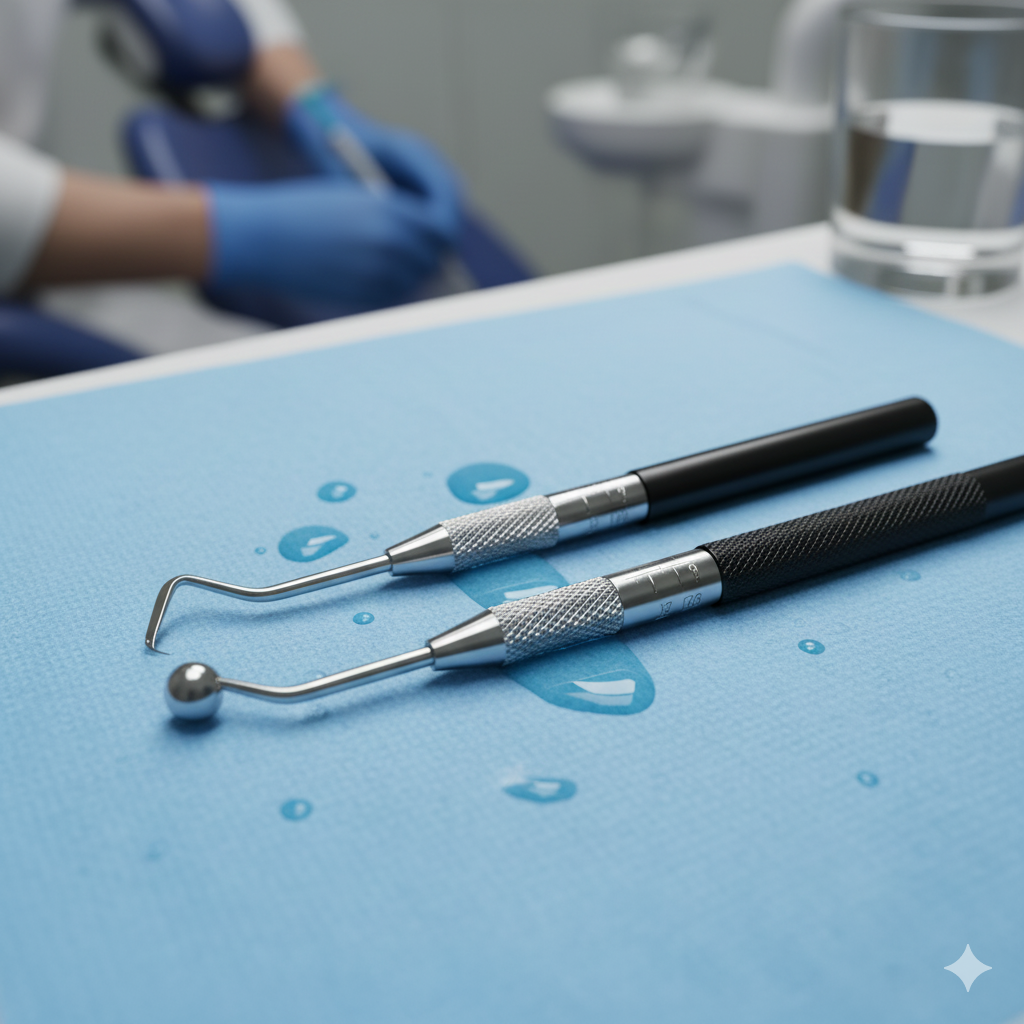
There are several types, including:
- UNC-15 Probe – with 1-mm markings up to 15 mm.
- Williams Probe – with specific markings at 1, 2, 3, 5, 7, 8, 9, 10 mm.
- WHO Probe – used in global surveys, has a ball tip and colour band.
- Nabers Probe – curved design for furcation (root bifurcation) assessment.
Each type serves different clinical situations and preferences.
4. How should a periodontal probe be used correctly?
Insert the probe gently alongside the tooth, keeping it parallel to the tooth’s long axis. Apply light pressure (10–20 g) and “walk” the probe around the tooth in small steps to record six readings per tooth (three on the facial side and three on the lingual side). Consistency is key for accurate diagnosis.
5. Why is the periodontal probe important in prosthodontics?
Before creating any prosthesis, the dentist must assess the gum and bone support. Using a periodontal probe ensures that crowns, bridges, and implants are placed only on teeth and tissues that can support them, leading to long-term success of dental restorations.