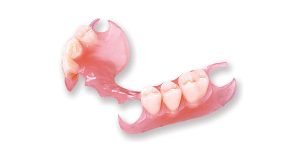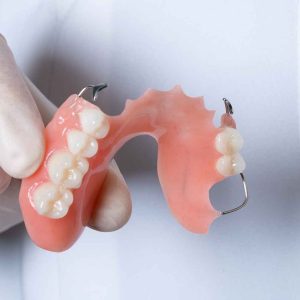
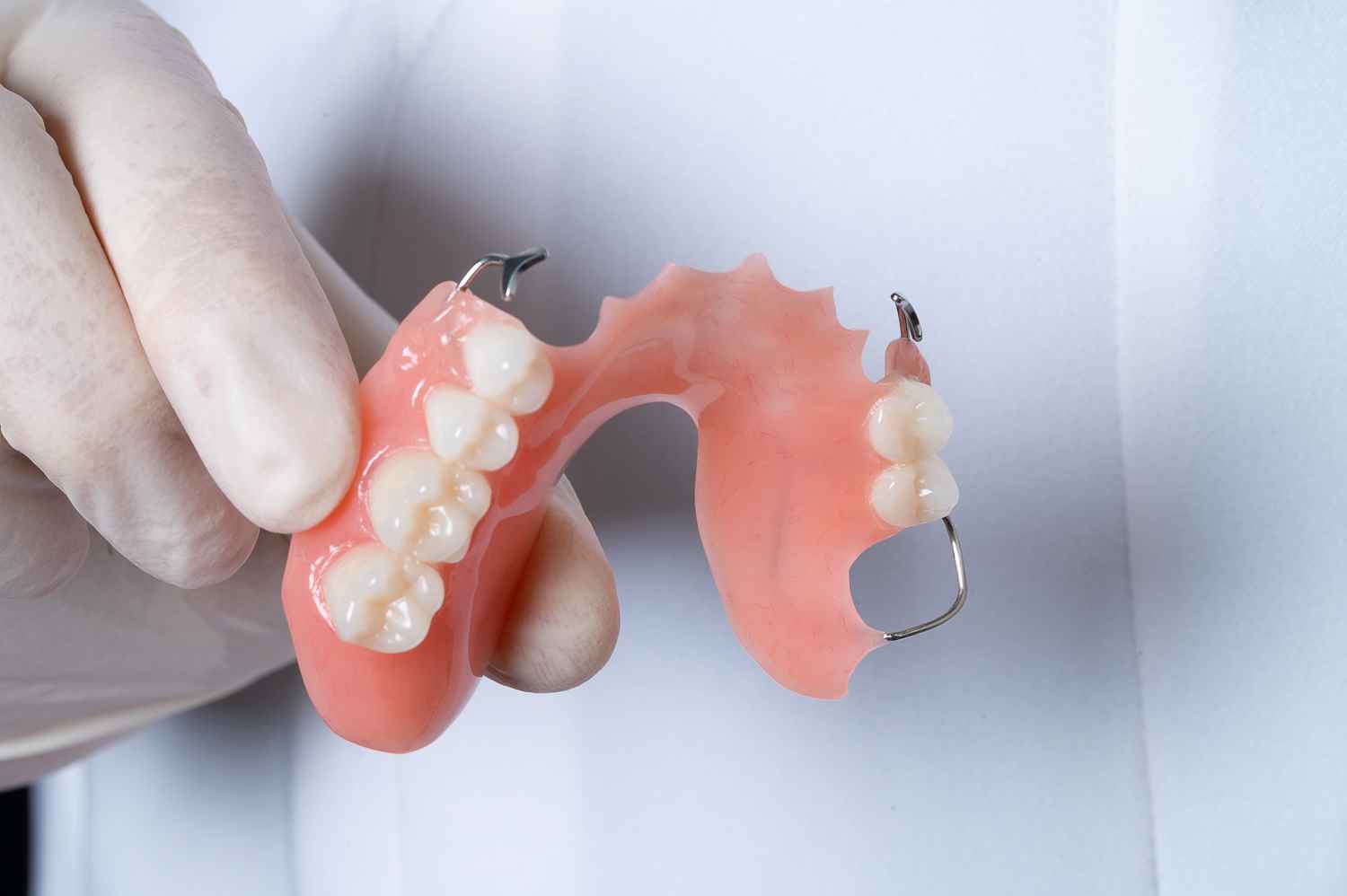
Acrylic dentures are removable prosthetics made from rigid PMMA, used to replace missing teeth in fully or partially edentulous patients:
- Complete Acrylic Dentures: Replace all teeth in an edentulous arch (maxilla or mandible).
- Acrylic Partial Dentures: Replace some teeth, using metal or acrylic clasps for retention on remaining teeth. Unlike flexible dentures (nylon-based, ~100–200 MPa) or Co-Cr cast partial dentures (800–1,000 MPa), acrylic dentures are less flexible but more rigid than thermoplastics, cost-effective, and widely used. They are less durable than Co-Cr but easier to adjust and repair. The design process leverages CAD/CAM and DSD for precision and esthetics, particularly for anterior teeth.
- Strength: ~80–120 MPa (lower than flexible dentures, Co-Cr, zirconia, or E-max).
- Applications: Complete dentures for edentulous patients; partial dentures for Kennedy Class I–IV arches when cost or simplicity is prioritized
Advantages of Acrylic Denture Design
- Esthetics: Acrylic teeth can mimic natural teeth; DSD enhances anterior placement, comparable to flexible dentures but less than E-max/zirconia.
- Ease of Repair/Adjustment: PMMA is easier to modify or reline than flexible thermoplastics or Co-Cr frameworks.
- Biocompatibility: Nickel-free, suitable for metal-allergic patients (unlike Ni-Cr crowns).
- Minimal Prep: Partial dentures require minimal/no tooth prep (similar to flexible dentures); complete dentures need none.
- DSD Integration: Optimizes esthetics for anterior teeth, aligning with facial features, similar to E-max/zirconia workflows.
CAD Design
- Import scans to CAD software.
- Design denture:
- Base: 2–3 mm thick, 1–2 mm tissue clearance.
- Clasps (partial): Acrylic/metal in undercuts.
- Teeth: Acrylic/porcelain, aligned with DSD.
Optimize path of insertion; check occlusion.