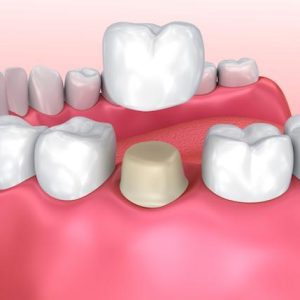
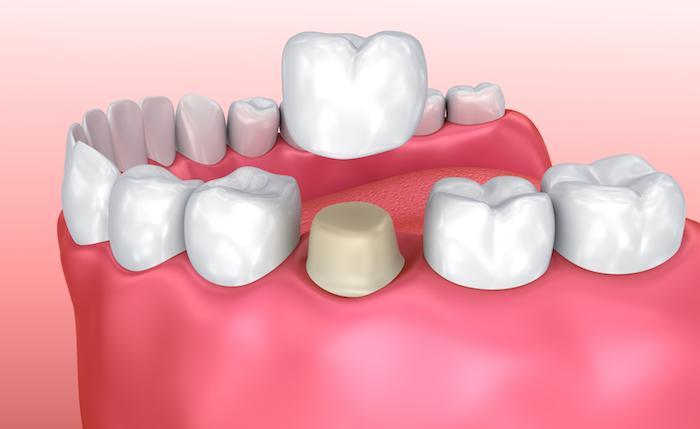
Temporary crowns are short-term restorations typically made from acrylic, composite, or preformed materials (e.g., PMMA, bis-acryl) to cover a prepared tooth until the permanent crown (e.g., zirconia, E-max, or Ni-Cr) is fabricated. They protect the tooth, maintain occlusion, and provide interim esthetics. Unlike permanent restorations (zirconia: 700–1,200 MPa, E-max: 360–500 MPa, Ni-Cr: 800–1,000 MPa) or dentures (acrylic, flexible, Co-Cr), temporary crowns prioritize ease of fabrication, adjustability, and cost-effectiveness over long-term durability.
Advantages of Temporary Crown Design
- Esthetics: Anterior temporaries can mimic E-max/zirconia with DSD planning, providing good interim appearance.
- Tooth Protection: Shields prepared tooth from sensitivity, fracture, or bacterial infiltration.
- Adjustability: Easy to modify (trim, polish, or reline) compared to Co-Cr or flexible dentures.
- DSD Integration: Enhances anterior esthetics, aligning with final restoration design, similar to E-max/zirconia workflows.
- Digital Workflow: CAD/CAM milling ensures precision, comparable to permanent crowns.
CAD Design
- Software: Import scans into CAD software (e.g., exocad, 3Shape Dental System).
- Crown Design:
- Anatomy: Replicate the pre-prep tooth shape or use DSD to design esthetic contours (e.g., golden ratio for anteriors). Mimic the planned permanent crown’s shape.
- Thickness: Design with 0.5–1.0 mm thickness for strength (less than Ni-Cr’s 0.8–1.5 mm, similar to E-max veneers’ 0.3–0.5 mm).
- Margins: Ensure precise fit to prep margins (20–50 micron cement gap) to prevent leakage or tissue irritation.
- Occlusion: Use virtual articulators to align with opposing teeth, avoiding high spots or interferences.
Proximal Contacts: Design tight but adjustable contacts to prevent food impaction.