
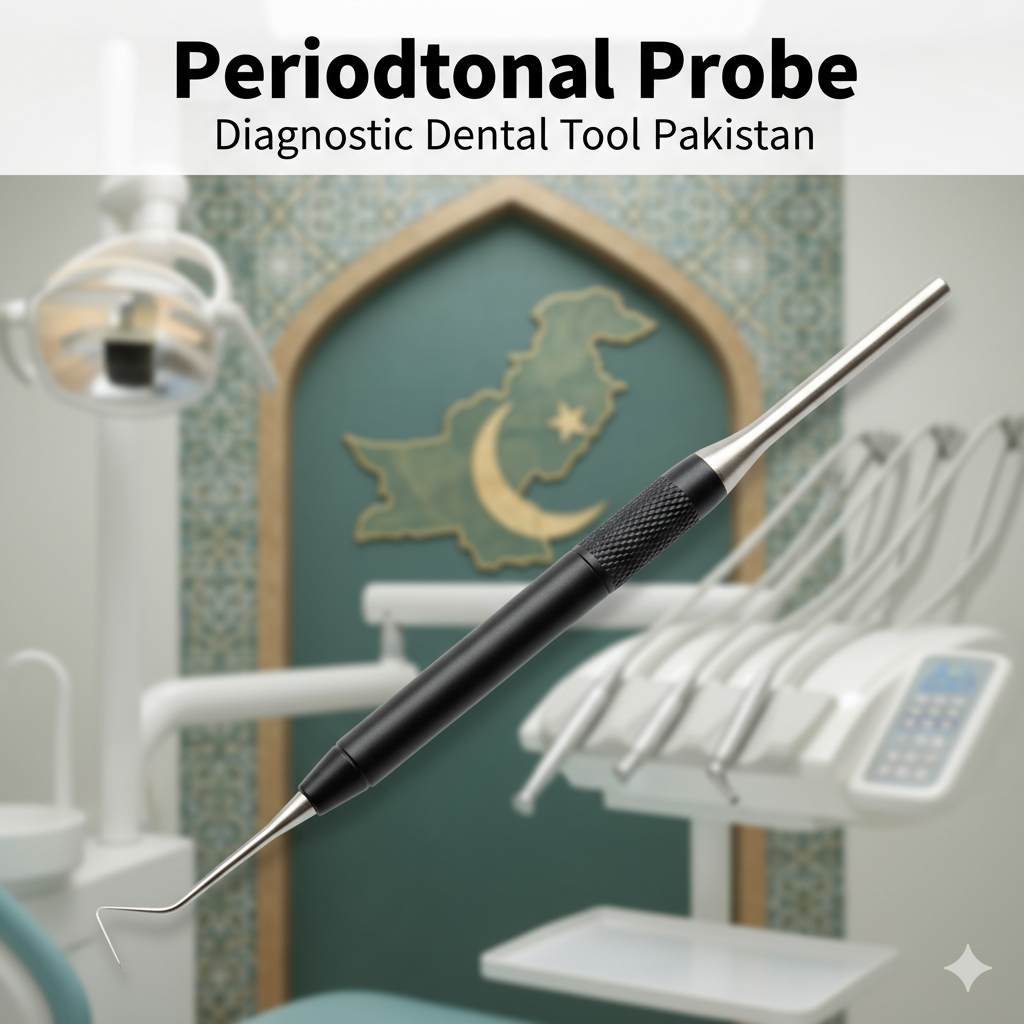
Periodontal Probe | Diagnostic Dental Tool Pakistan
In the realm of dental diagnostics and treatment planning, the periodontal probe plays a central and indispensable role. As part of the category “Clinical Prosthodontics Equipment → Diagnostic Instruments”, the periodontal probe serves as a precision tool that enables dentists to assess the health of the periodontium, measure pocket depths, and guide restorative and prosthodontic procedures. For dental practices across Pakistan — from Karachi to Lahore, Islamabad to Peshawar — awareness and mastery of the periodontal probe is key to delivering high-quality care and optimal outcomes. What is a Periodontal Probe? A periodontal probe is a slender, blunt-ended dental instrument marked in millimetres (or colour-bands) used to measure the depth of the gingival sulcus or periodontal pocket around a tooth. ScienceDirect+2Wikipedia+2 Typically made of stainless steel or other durable materials, the probe’s markings allow clinicians to quantify pocket depths, assess clinical attachment loss, measure gingival recession and other parameters. Colgate Professional+1 In lay terms: if you imagine the space between your gum and tooth, the periodontal probe is the “ruler” that helps the dentist determine if that space is healthy (typically ~1-3 mm) or has developed into a deeper pocket (≥4 mm) which may signal disease. My Costa Mesa Dentist+1 Why the Periodontal Probe Matters in Prosthodontics Diagnostic Foundation for Prosthodontic Planning In prosthodontics, especially when fabricating crowns, bridges, implants or full-mouth rehabilitations, understanding the condition of the periodontium is essential. If a tooth or its supporting bone is compromised by periodontal disease, prosthodontic outcomes may be jeopardised. The periodontal probe therefore serves as a diagnostic instrument that informs whether the periodontal tissues are adequate to support prosthetic work. Ensuring Long-Term Success of Dental Prostheses Poor periodontal support can lead to loosening of crowns, failure of implants, bone loss and other complications. By using the probe to measure periodontal pocket depths, attachment levels and gingival health, the prosthodontist can design treatments that factor in these parameters — ensuring that the prosthetic work is placed in a healthy and stable foundation. Integrating with Periodontal Therapy In many cases, prior to prosthodontic rehabilitation, periodontal treatment (for example scaling, root-planning, regenerative therapy) may be required. The probe helps to monitor the effect of such therapy by recording baseline measurements and follow-ups, so that when prosthetic work begins, the tissues are stable. As noted in literature, the probe continues to be “an important diagnostic instrument by the dental profession.” Key Features & Specifications of a Good Periodontal Probe For a dental practice in Pakistan investing in clinical prosthodontics equipment, here are the features you should look for when sourcing a quality periodontal probe: In the context of Pakistan, where clinics span from high-end urban dental centres to rural outreach programmes, selecting a probe that is both cost-effective and meets sterilisation/cleaning requirements is critical. Technique: How to Use a Periodontal Probe Reliably Accurate measurements with the periodontal probe depend less on the instrument alone and more on the technique. Key steps include: For dental practices in Pakistan, training staff and maintaining consistent probing technique is essential — this ensures accurate diagnosis and better prosthodontic outcomes. Clinical Parameters Measured by the Periodontal Probe The periodontal probe is used not only for pocket depth but multiple relevant parameters: These measurements are critical in treatment planning — including whether prosthodontic work can proceed immediately, or whether periodontal therapy must precede it. Buying & Maintaining Periodontal Probes: Pakistan Market Considerations What to Look For When Sourcing For dental clinics in Pakistan (Karachi, Lahore, Islamabad, etc.), here are practical considerations: Maintenance & Hygiene Advantages of Using the Right Periodontal Probe in Prosthodontics Challenges & Best Practices in the Pakistani Context Challenges Best Practices Summary & Conclusion For dental clinics across Pakistan looking to excel in the field of prosthodontics, integrating the periodontal probe as a routine diagnostic instrument is essential. At Biosurgico, we emphasise the importance of selecting a high-quality probe, standardising technique, and using the measurements obtained to guide prosthodontic planning and execution. When periodontal health is assessed reliably, prosthetic work becomes more predictable, durable and successful. The periodontal probe is not just a small instrument – it is the gateway to understanding the foundation upon which crowns, bridges, implants and full-mouth rehabilitations rest. If you are sourcing clinical prosthodontics equipment (diagnostic instruments) for your practice in Pakistan, give the periodontal probe the attention it deserves — from purchase, training, technique to monitoring. With that, you’ll raise the standard of care, enhance patient outcomes, and bolster your clinic’s reputation in a competitive market. 🦷 Frequently Asked Questions (FAQs) About the Periodontal Probe 1. What is a periodontal probe used for? A periodontal probe is a diagnostic dental instrument used to measure the depth of the space (pocket) between the tooth and surrounding gum tissue. It helps dentists identify gum disease, monitor periodontal health, and plan prosthodontic treatments such as crowns, bridges, and implants. 2. How many millimetres is normal for a periodontal pocket? A healthy gingival sulcus typically measures 1–3 mm. A measurement of 4 mm or more may indicate the presence of periodontal disease, requiring professional cleaning or treatment before prosthodontic procedures begin. 3. What are the types of periodontal probes? There are several types, including: 4. How should a periodontal probe be used correctly? Insert the probe gently alongside the tooth, keeping it parallel to the tooth’s long axis. Apply light pressure (10–20 g) and “walk” the probe around the tooth in small steps to record six readings per tooth (three on the facial side and three on the lingual side). Consistency is key for accurate diagnosis. 5. Why is the periodontal probe important in prosthodontics? Before creating any prosthesis, the dentist must assess the gum and bone support. Using a periodontal probe ensures that crowns, bridges, and implants are placed only on teeth and tissues that can support them, leading to long-term success of dental restorations.
Periodontal Probe | Diagnostic Dental Tool Pakistan Read More »